mmWave Presence Sensor Coverage Attributes
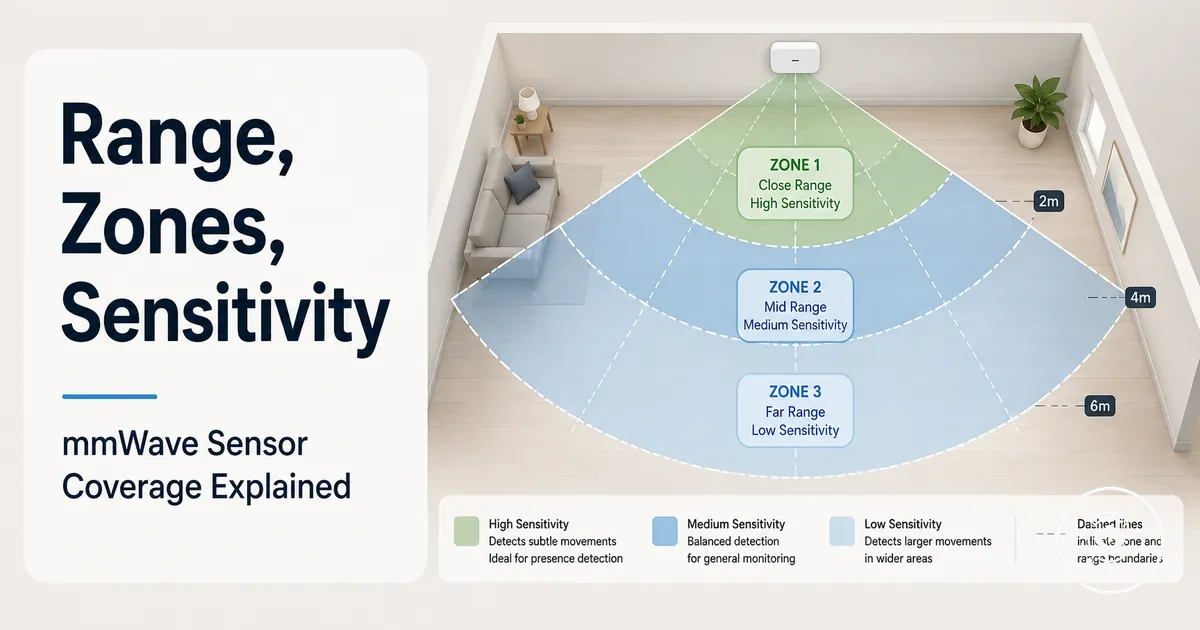
A mmWave presence sensor uses coverage attributes such as range, zones, sensitivity, and field of view to define how its detection area is interpreted in a room. These attributes connect the sensor coverage area with conditions that influence detection reliability and help explain how presence detection may vary across different environments.

A room-level detection need depends on factors such as the available coverage area, room condition, sensor configuration, and the intended detection area. A mmWave radar sensor may respond differently depending on distance, field of view, and sensitivity settings, so coverage outcomes can vary between different layouts and configurations. The boundary is that coverage attributes describe detection capability rather than a fixed result for every environment.
The main coverage attributes work together: range relates to distance and static presence detection, zones describe active and ignored areas within coverage, and sensitivity influences responses to smaller changes such as micro-movement. These connected attributes help explain how a mmWave presence sensor links coverage conditions with detection outcomes. The following sections examine range, zones, and sensitivity as parts of the overall coverage framework.
How range, zones, and sensitivity define presence coverage
Range, zones, and sensitivity define mmWave presence sensor coverage by combining distance reach, detection area organization, and response thresholds into a connected coverage framework. Range influences how distance is interpreted, zones separate parts of the detection area, and sensitivity affects responses to smaller changes. Together, these attributes shape detection reliability according to the sensor condition and room environment.
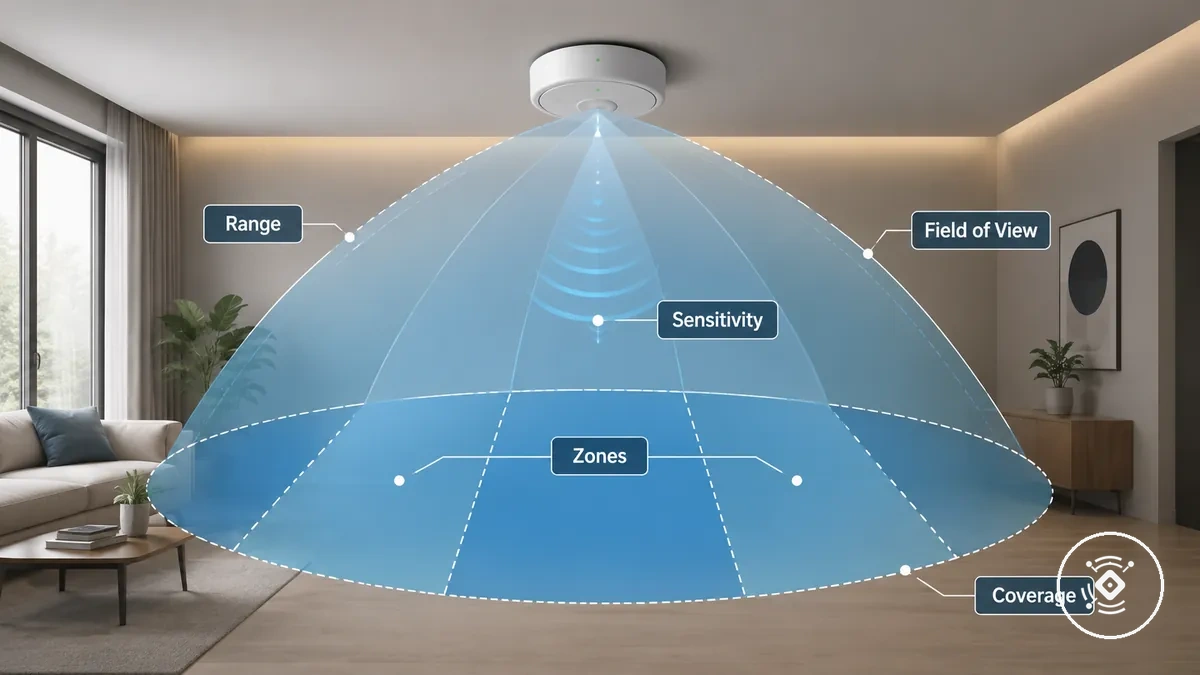
A mmWave presence sensor may provide different coverage outcomes depending on model design, room condition, field of view, and configuration. The relationship between these attributes connects to how mmWave detection works, where the detection process and sensor operation are explained. Coverage depends on how range, zones, and sensitivity interact rather than on one attribute alone.
These attributes work together to create a usable coverage area:
- Range: defines the distance-related area where presence signals may be detected, with reliability depending on conditions such as room layout and sensor design.
- Zones: divide the detection area into active area and ignored area segments, helping describe where detection attention is focused.
- Sensitivity: defines the response threshold for smaller changes, including micro-movement, which may influence over-detection or missed detection conditions.
- Field of view: describes the shape and spread of the detection area within a specific room condition.
These coverage attributes describe how a mmWave presence sensor may behave under different conditions, not perfect detection in every room or through every material. The wider mmWave presence sensor hub provides additional context for related coverage and selection topics.
Detection range and distance limits
Detection range and distance limits describe how a mmWave presence sensor interprets distance-related coverage within a room. The detection range depends on factors such as target type, mounting position, room condition, and sensor design rather than representing one fixed outcome. Understanding this distance attribute helps separate a possible maximum range from a more practical reliable range for presence detection.
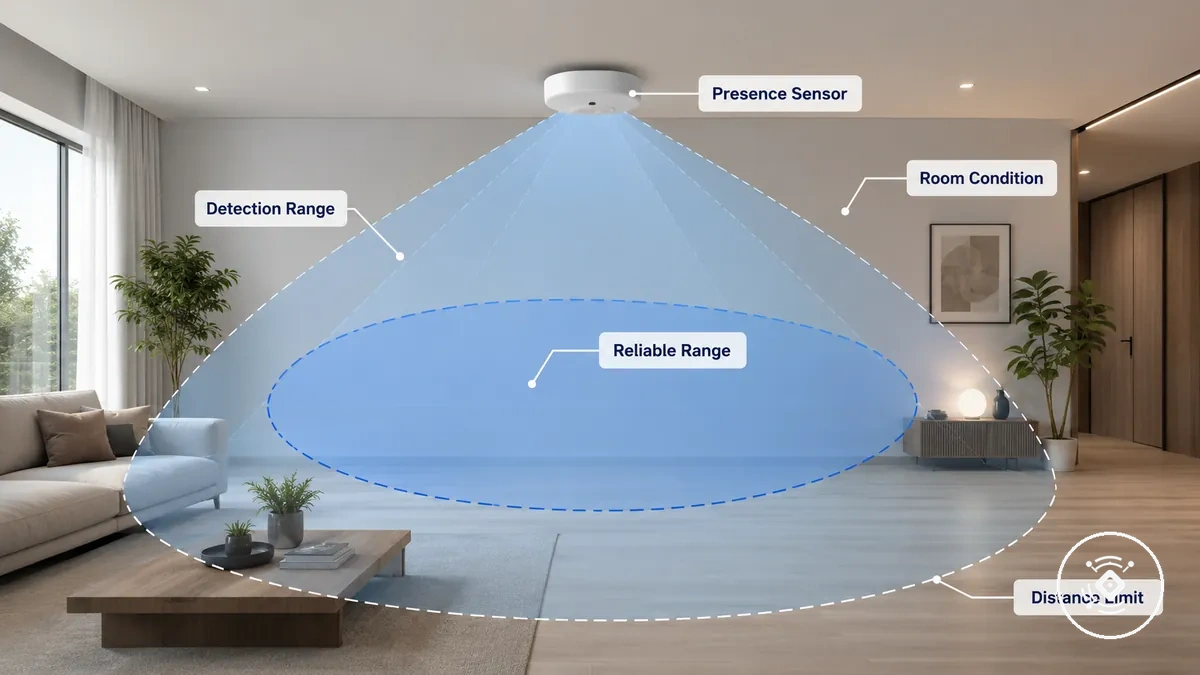
A mmWave radar sensor may interpret static presence and motion detection differently depending on distance, environment, and configuration. The detection area can change based on how signals interact with the room condition and the sensor design. A distance limit should be viewed as part of the overall coverage context rather than as a guarantee of identical detection reliability in every space.
Detection range and distance limits can be understood through these attribute relationships:
| Attribute | Value or condition | Detection result |
|---|---|---|
| Maximum range | Distance boundary under specific conditions | Shows a possible coverage limit that may differ from reliable presence detection. |
| Reliable range | Distance area where detection outcomes may be more consistent | Depends on sensor design, room condition, and the intended detection need. |
| Distance limit | Boundary of the detection area | Helps define where coverage may reduce or change. |
A quoted range value should be interpreted alongside room condition, sensor design, and the difference between static presence and motion detection. Coverage depends on connected distance factors rather than a single measurement alone.
Motion range versus static presence range
Motion range and static presence range can differ because target movement and stillness create different detection conditions. A moving target may create stronger changes for a mmWave presence sensor to interpret, while static presence can depend more on sensitivity, distance, sensor design, and room condition. This distinction helps explain why detection confidence may change within the same coverage area.
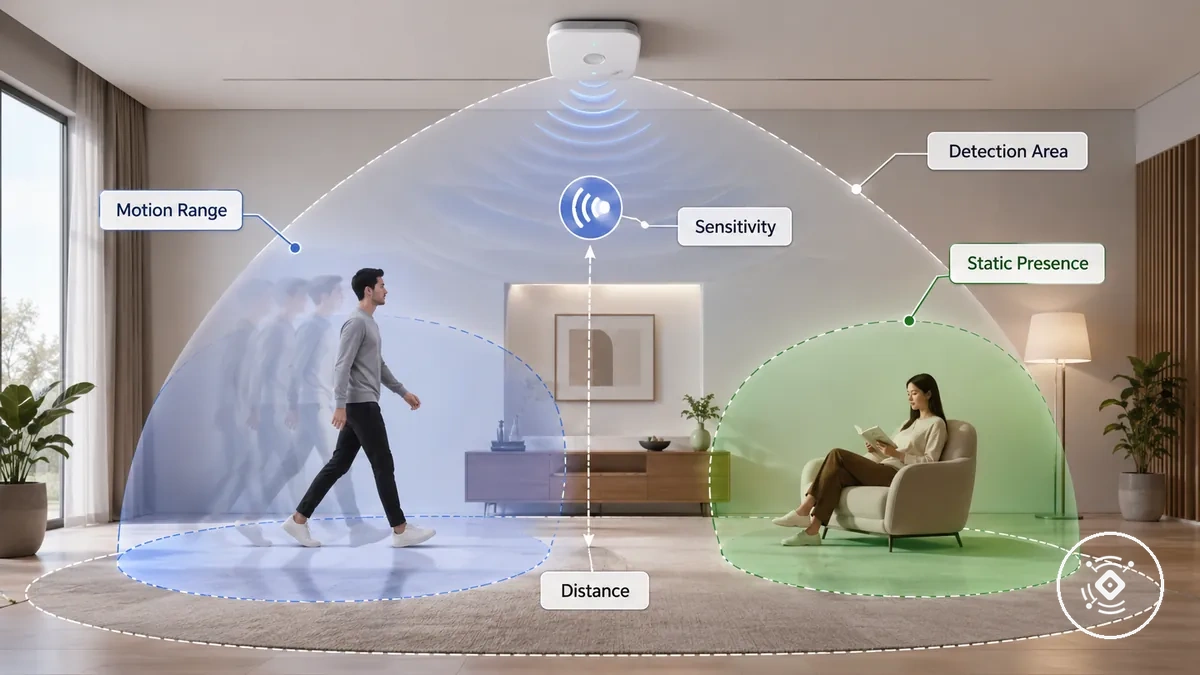
Motion detection and static presence depend on the relationship between target state, detection range, and distance limit. Larger body movement may be easier to interpret than smaller movement patterns at similar distances, while still-person detection can depend on sensitivity and signal conditions. The practical implication is that the reliable range for movement may differ from the reliable range for stable static presence.
Motion range versus static presence range can be compared through these local detection differences:
| Aspect | What changes | Practical meaning |
|---|---|---|
| Target state | Movement or stillness changes the detection condition | Motion detection and static presence may produce different detection confidence. |
| Distance | Signal conditions can vary across the detection range | Distance limit and room condition may influence the reliable range. |
| Sensor response | Sensor design and sensitivity affect how changes are interpreted | Static presence may require different conditions from moving targets. |
Near-field and far-field detection behaviour
Near-field and far-field detection behaviour describes how different distance areas within the same detection range may influence detection reliability. A mmWave presence sensor can interpret closer and farther areas differently because signal conditions, sensor design, and room condition may vary across the coverage area. This local distinction helps explain changes in detection outcomes without assuming identical behaviour for every sensor.
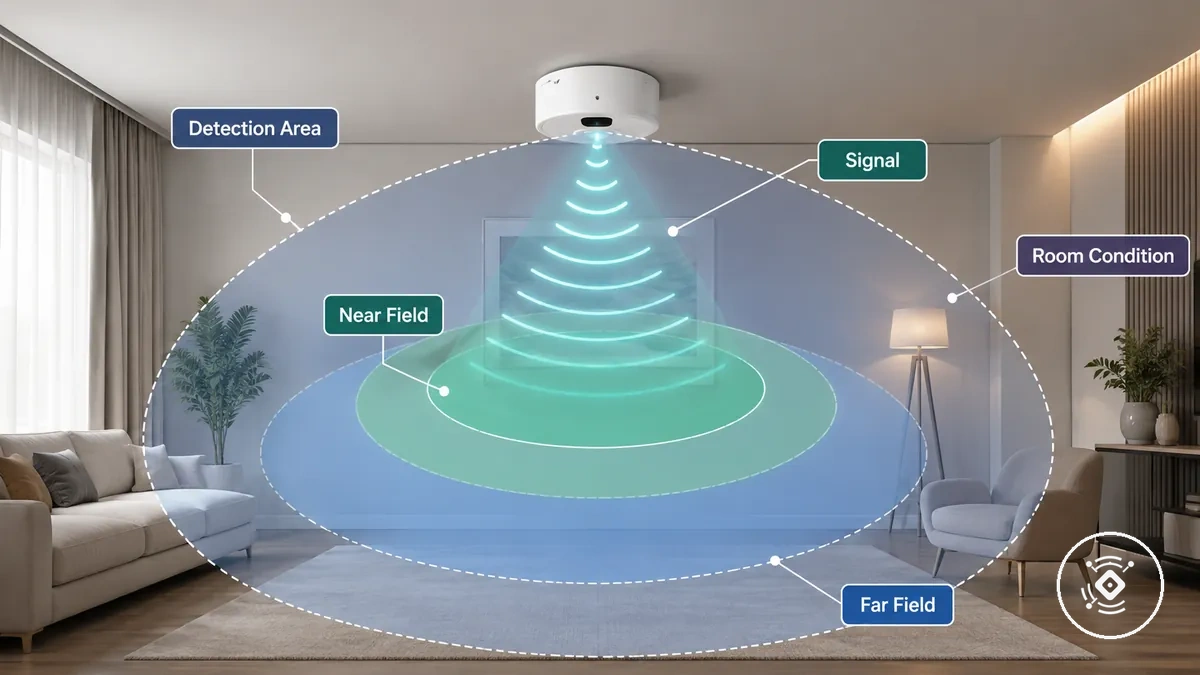
Near-field areas may have different sensitivity conditions from far-field areas, while farther detection areas may experience changes in signal behaviour as distance increases. The reliable range can depend on static presence, motion detection, sensor configuration, and environmental conditions. A distance limit should be interpreted together with the sensor design and room condition rather than as a fixed rule.
A room scenario can show this difference when a target is positioned close to the sensor compared with a position near the edge of the detection area. The two locations may create different detection conditions, so near-field and far-field behaviour should be evaluated as part of the overall coverage context.
Field of view and coverage shape
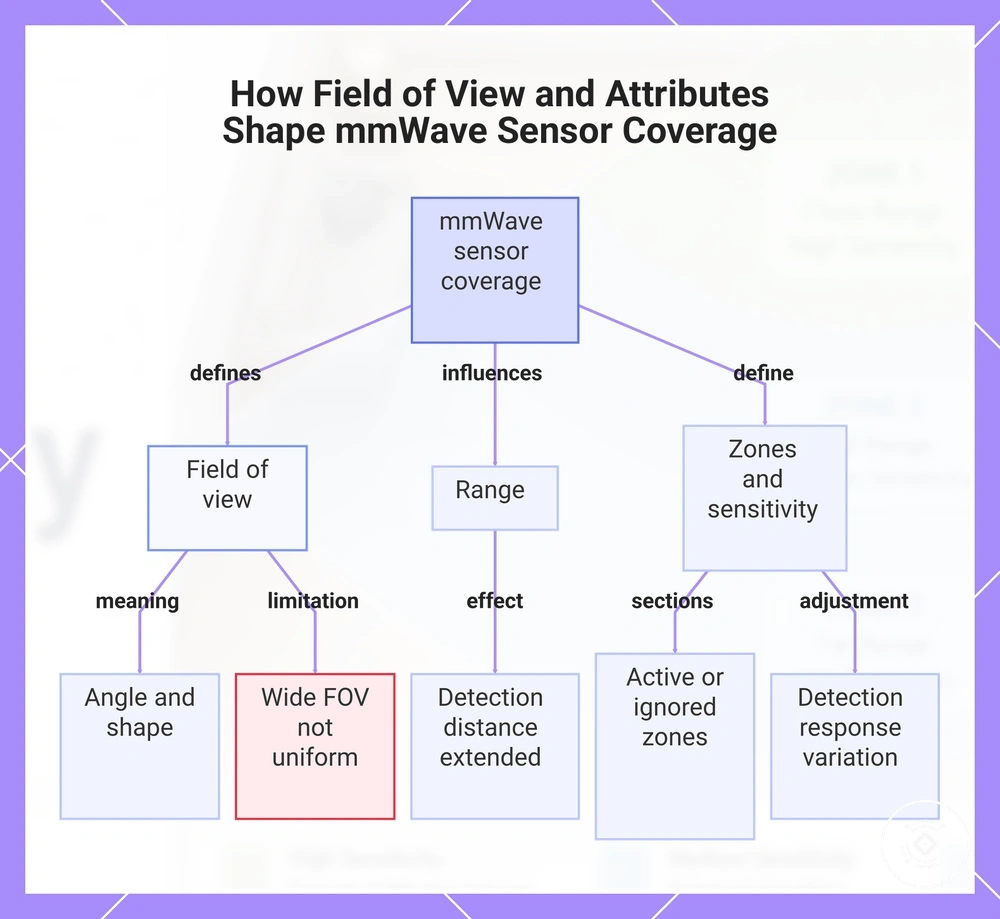
Field of view describes the coverage shape of a mmWave presence sensor and determines how range and zones can operate across a detection area. The field-of-view attribute connects the sensor with the angle or beam shape that influences covered, weak, and uncovered areas. This helps explain how coverage is structured before considering other factors that may affect detection reliability.
A mmWave presence sensor uses field of view together with range, zones, and sensitivity to define how coverage appears under different room conditions. The coverage area may vary depending on sensor design, distance, and environmental factors that influence detection outcomes. A wider field of view can expand the visible area, but it does not automatically mean uniform detection strength across the entire coverage shape.
The relationship between field of view and coverage shape can be understood through these attribute connections:
- Field of view: defines the angle and shape of the sensor coverage area.
- Range: influences how far the detection area may extend within the field of view.
- Zones: describe sections of the coverage area that may be interpreted as separate active or ignored areas.
- Sensitivity: influences how detection responses may change across different parts of the coverage shape.
The coverage boundary depends on the relationship between field of view, room condition, and connected sensor attributes. A coverage shape can show where detection areas exist, but actual detection reliability may vary between different conditions.
This chart shows how field of view, range, zones, and sensitivity define the coverage shape of a mmWave presence sensor.
Detection angle, room coverage, and coverage gaps
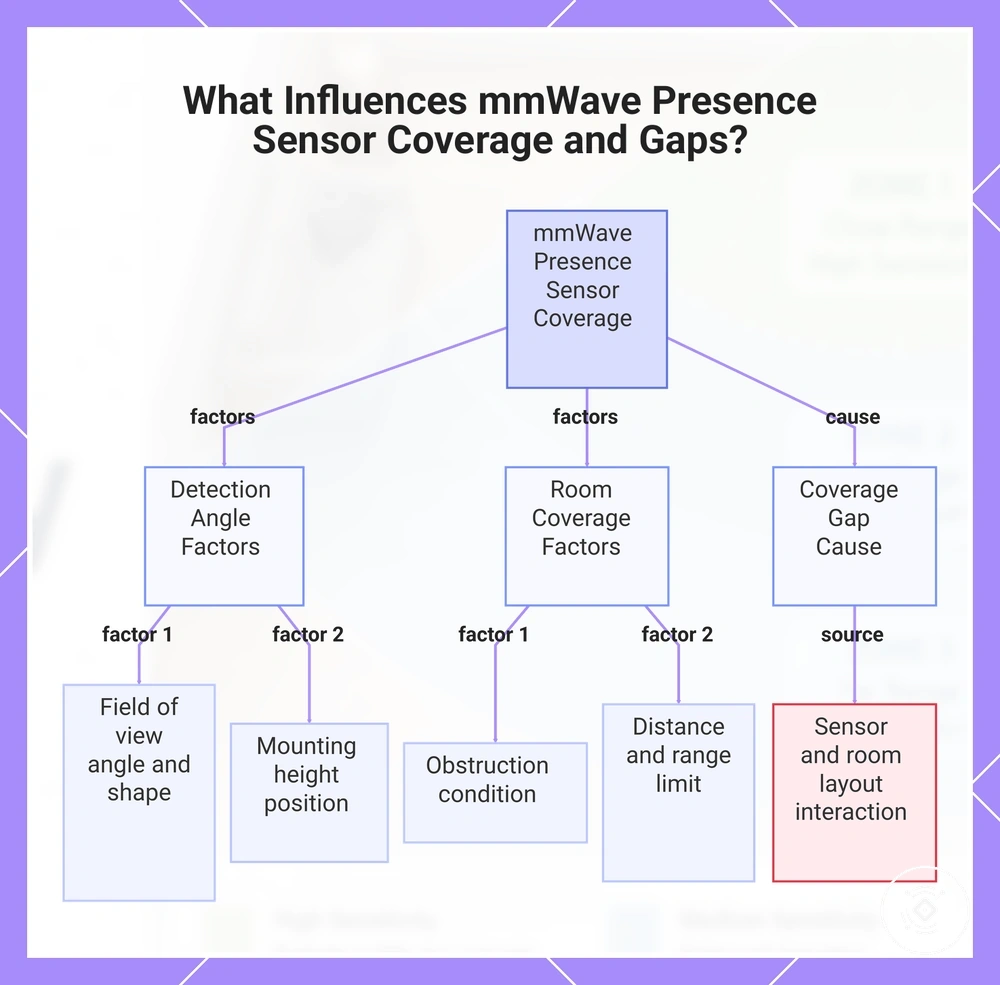
Detection angle, room coverage, and coverage gaps describe how field-of-view conditions influence the usable coverage area of a mmWave presence sensor. The detection angle connects the sensor with the direction and shape of the detection area. Evaluating these criteria helps identify where coverage may remain stable and where room conditions may create limitations.
A mmWave presence sensor coverage area can depend on field of view, mounting height, obstruction condition, sensor design, and distance. These factors may influence detection range, distance limit, and detection reliability for static presence or motion detection. Coverage gaps can result from the interaction between sensor capability and room layout rather than from the sensor alone.
These criteria help evaluate detection angle and room coverage:
- Field of view: The angle and shape of the detection area influence where coverage may extend or become limited.
- Mounting height: The sensor position can affect how the coverage area is distributed within the room condition.
- Obstruction condition: Objects or layout features may influence whether areas remain within the intended detection area.
- Distance: The relationship between range and distance limit can influence the reliable range across different parts of the coverage area.
A room with fewer obstructions may create different coverage conditions from a room with layout limitations. The boundary to consider is that sensor capability and room-layout conditions can both influence detection outcomes.
This chart shows the key factors affecting detection angle and room coverage, plus the cause of coverage gaps.
Detection zones and multi-zone coverage
Detection zones are defined areas within a mmWave presence sensor coverage field that organize how detection is interpreted across a room area. A detection zone is a subdivision of the sensor detection area rather than a separate sensor component. These zones help connect the sensor attribute with active area, ignored area, and segmented coverage conditions.
A mmWave presence sensor may use multi-zone coverage to divide a coverage area based on the target, room condition, and intended automation area. A virtual zone can represent a specific segment of the detection area, while an active area may identify where detection attention is applied. An ignored area may be treated differently depending on configuration, sensor design, and the relationship between the target and surrounding room area.
Detection zones can be evaluated through these attribute relationships:
| Attribute | Value or condition | Effect or decision |
|---|---|---|
| Active area | Zone where detection attention is applied | May support automation area or detection decisions based on the configured condition. |
| Ignored area | Zone treated differently from an active area | May help separate areas that are not intended to influence the detection outcome. |
| Virtual zone | Segment within the sensor coverage field | Helps describe how a room area is divided for interpretation. |
| Multi-zone | Multiple zones within one detection area | Allows different room areas to be considered separately depending on configuration. |
For example, a room area may be divided into different zones so that detection conditions can be interpreted separately. The boundary is that zones organize coverage areas, but detection reliability can still depend on sensor design, room condition, and other connected attributes.
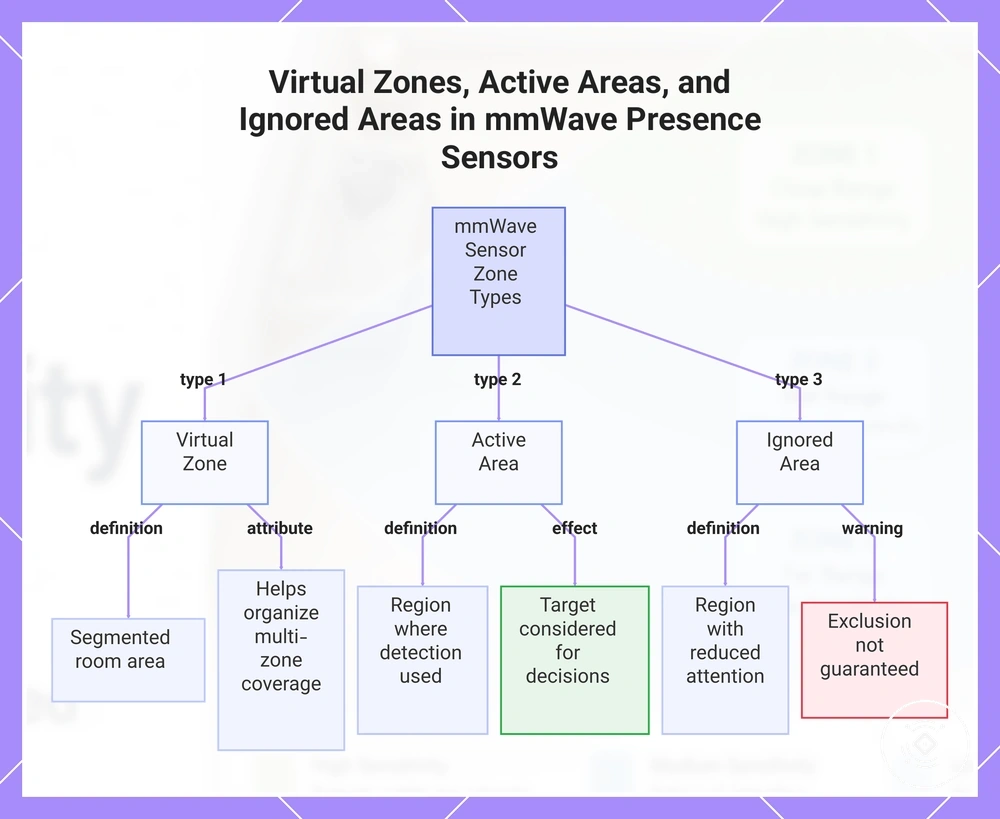
Virtual zones, active areas, and ignored areas
Virtual zones, active areas, and ignored areas describe different zone conditions within a mmWave presence sensor detection zone. A virtual zone represents a segmented room area inside the detection area, while an active area or ignored area describes how that zone may be interpreted. These labels help clarify how the sensor connects zone conditions with detection or automation outcomes.
A mmWave presence sensor can use zone-based conditions to separate how a target is considered within a room area. An active area may include a region where detection information is used, while an ignored area may reduce attention to a region depending on sensor model and configuration. A virtual zone can help organize a multi-zone coverage area, but detection reliability may still depend on sensor design, sensitivity, and room condition.
These zone types can be compared by their condition and possible effect:
- Virtual zone: A segmented area within the detection zone that helps define how a specific room area is interpreted.
- Active area: A zone condition where a target may be considered for detection or automation area decisions.
- Ignored area: A zone condition that may reduce attention to a region but does not guarantee complete exclusion in every model.
For example, a room area may use separate virtual zones to organize different automation areas. The boundary is that zone labels describe how coverage is interpreted, while detection outcomes can still vary with configuration and room conditions.
This chart defines and compares the three zone types used in mmWave presence sensor detection zones.
Single-zone, multi-zone, and multi-target behaviour
Single-zone, multi-zone, and multi-target behaviour can differ depending on sensor capability, room complexity, and detection needs. A single-zone approach uses one defined detection zone, while multi-zone and multi-target behaviour involve different ways of interpreting conditions within the coverage area. This comparison helps separate zone capability from the practical detection outcome.
The difference between these behaviours depends on how a mmWave presence sensor handles the detection zone, target, and room area. A single-zone configuration may treat the coverage area as one segment, while a multi-zone configuration may separate active area, ignored area, or virtual zone conditions. Multi-target behaviour relates to handling more than one target condition, but the result can still depend on sensor design, room condition, and configuration.
Single-zone, multi-zone, and multi-target behaviour can be compared through these local differences:
| Aspect | What changes | Practical meaning |
|---|---|---|
| Zone count | Single-zone uses one detection zone, while multi-zone uses multiple segmented areas | Different room areas may be interpreted separately depending on configuration. |
| Target handling | Multi-target behaviour considers multiple target conditions within the detection area | Detection outcomes may vary based on room activity and sensor capability. |
| Automation area | Zone conditions can define how an automation area is interpreted | Active area and ignored area decisions may depend on the intended detection need. |
A more complex room area may require different zone considerations from a simpler space. The boundary is that multi-zone or multi-target capability does not automatically mean better detection; the practical result depends on sensor design, configuration, and the surrounding environment.
Sensitivity and micro-movement detection
Sensitivity is the attribute that controls how strongly a mmWave presence sensor responds to small movement and presence signals. It acts as a threshold for interpreting micro-movement and can influence still-person detection depending on the sensor condition. The effect of sensitivity depends on sensor design, room condition, and the intended detection outcome.
A sensitivity adjustment may change how the sensor responds to smaller signals within the detection area. Higher sensitivity can improve the response to micro-movement, but it may also increase the possibility of over-detection depending on surrounding conditions. Lower sensitivity may reduce unwanted responses, but it can also influence missed detection in some situations. The balance between sensitivity, threshold, and stability depends on factors such as target condition, distance, and configuration.
Sensitivity behaviour can be understood through these attribute relationships:
| Attribute | Value or condition | Detection effect |
|---|---|---|
| Sensitivity | Response level for interpreting presence signals | Influences how the sensor reacts to different detection conditions. |
| Micro-movement | Small movement signals within the detection area | May affect still-person detection depending on threshold and environment. |
| Threshold | Point where signals are interpreted as relevant responses | Can influence over-detection, missed detection, and stability. |
| Adjustment | Change to sensitivity behaviour based on conditions | May help balance responsiveness and detection stability. |
The boundary is that higher sensitivity is not a universal measure of better detection. Sensitivity should be evaluated as a condition-based attribute where sensor design, room condition, and detection needs influence the outcome.
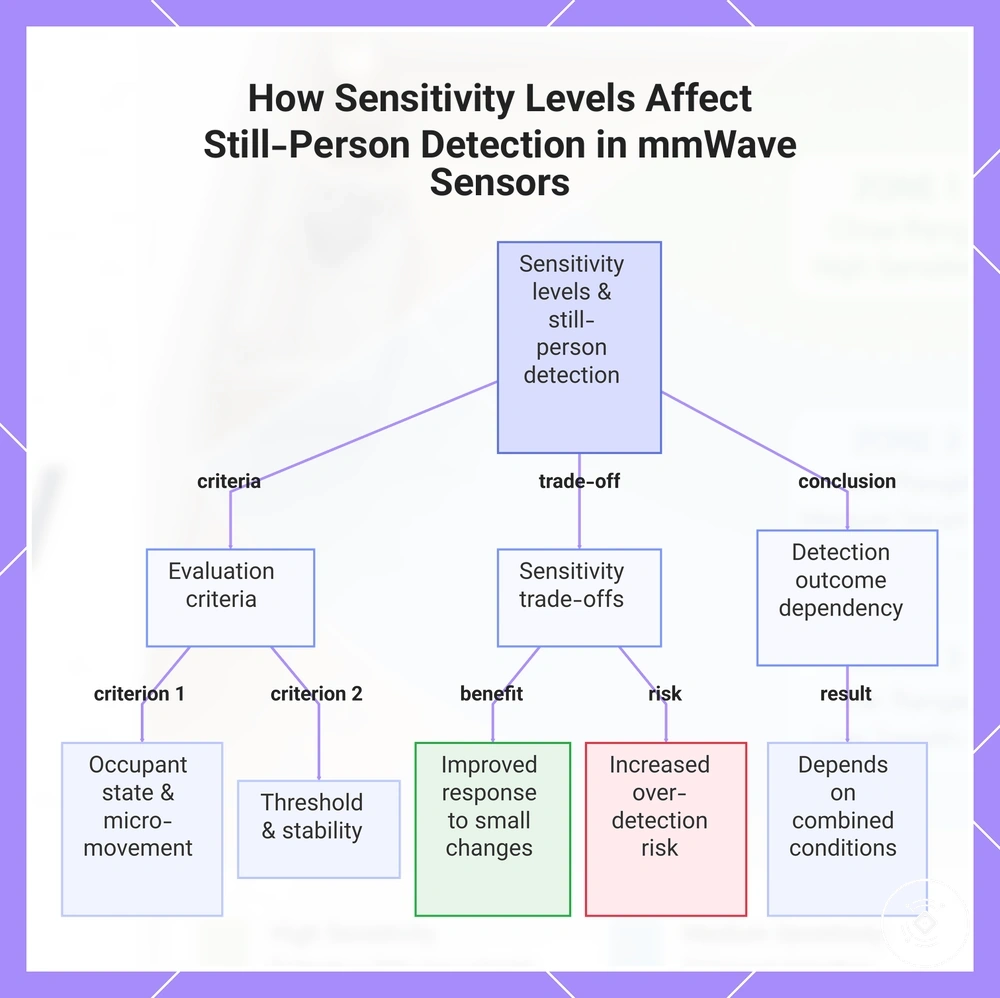
Sensitivity levels and still-person detection
Sensitivity levels influence how a mmWave presence sensor interprets still-person detection when movement signals are limited. A still occupant may rely on micro-movement signals being identified above the sensitivity threshold. The detection outcome can depend on sensor design, room condition, distance, and the selected sensitivity adjustment.
Still-person detection is connected to the relationship between occupant state, micro-movement, and detection stability. Small movements may affect whether a presence signal is interpreted within the detection area, while conditions that reduce signal clarity may contribute to missed detection. A higher sensitivity level may improve responses to smaller changes, but it may also increase over-detection depending on the environment and configuration.
These criteria help evaluate how sensitivity levels affect still-person detection:
- Occupant state: A still target provides different movement conditions compared with larger body movement.
- Micro-movement: Small changes may influence whether presence signals are interpreted within the coverage area.
- Threshold: The sensitivity threshold affects how signals are separated from surrounding conditions.
- Stability: Detection stability depends on sensitivity adjustment, sensor design, and room condition.
A person positioned closer to the sensor may create different detection conditions from someone farther away in the same room area. The boundary is that sensitivity levels can influence still-person detection, but the outcome depends on combined conditions rather than sensitivity alone.
This chart shows the key criteria, trade-offs, and overall dependency that influence still-person detection when adjusting sensitivity levels.
Sensitivity changes that reduce over-detection
Sensitivity changes that reduce over-detection involve adjusting how a mmWave presence sensor responds to signals that may be interpreted as presence. These adjustments should be connected to specific symptoms and room conditions rather than treated as a universal solution. The relationship between sensitivity, threshold, and stability depends on sensor design, detection area, and the surrounding environment.
A sensitivity adjustment may reduce over-detection when environmental triggers or detection spillover create unwanted responses. Lowering sensitivity may reduce responses to certain micro-movement signals, but it can also affect still-person detection or contribute to missed detection depending on the condition. The outcome depends on balancing the threshold, stability, and intended presence detection needs.
These criteria help evaluate sensitivity changes and their possible effects:
- Sensitivity setting: A change in response level that may influence how the sensor interprets signals within the detection area.
- Micro-movement: Small movement signals that may contribute to over-detection depending on the room condition.
- Threshold: The response boundary that influences whether signals are interpreted as relevant presence.
- Stability: The balance between reducing unwanted responses and maintaining suitable detection behaviour.
For broader adjustment considerations, calibration and sensor settings can provide additional context. A sensitivity change may not address every false response condition, and situations requiring deeper diagnosis may need false detection troubleshooting.
How range, zones, and sensitivity interact
Range, zones, and sensitivity interact as a criteria-based system that influences how a mmWave presence sensor interprets its coverage area. These attributes work together because changes in detection range, zone boundaries, or sensitivity settings can affect the final detection outcome. The relationship depends on sensor design, room condition, and the intended detection need.
A wider detection range may extend the coverage area, but the reliable range and distance limit can vary when sensitivity and zone settings change. Higher sensitivity may help interpret smaller signals such as micro-movement, but it can also increase over-detection when combined with a larger detection area. Zones can limit attention to an active area or ignored area, helping shape how the sensor responds within a room area. These trade-offs mean that increasing one attribute may create a different limitation depending on the condition.
The interaction between these attributes can be organized through the following criteria matrix:
| Entity/part | Attribute/criterion | Value/condition | Effect/risk/decision |
|---|---|---|---|
| Detection range | Distance coverage | Maximum range and reliable range may vary by sensor design and environment | May influence the balance between wider coverage and consistent detection. |
| Zones | Area control | Active area or ignored area segmentation within the detection area | May help focus detection attention on a useful room area. |
| Sensitivity | Signal response | Threshold adjustment for interpreting smaller signals | May influence static presence, motion detection, over-detection, or missed detection conditions. |
The practical interpretation is that range, zones, and sensitivity require balance rather than maximizing one attribute alone. A suitable combination depends on the room condition, detection purpose, and how the sensor configuration handles different signals.
Coverage conditions and attribute limits
Coverage conditions and attribute limits describe how environmental factors can modify mmWave presence sensor coverage and detection outcomes. These conditions influence attributes such as range, zones, sensitivity, and field of view rather than creating the same result in every environment. Evaluating these limits helps explain how room condition and sensor design affect detection reliability.
A mmWave presence sensor may experience different coverage conditions depending on room layout, materials, movement type, signal spillover, and sensor position. These factors can influence the detection area, range, and sensitivity response for static presence or motion detection. Zones and field of view may help define where coverage is focused, but the outcome depends on configuration and surrounding conditions.
These coverage conditions can be evaluated through the following criteria matrix:
| Entity/part | Attribute/criterion | Value/condition | Effect/risk/decision |
|---|---|---|---|
| Room layout | Coverage condition | Arrangement of objects and available detection area | May influence how coverage is distributed within the room condition. |
| Materials | Signal condition | Surrounding surfaces and environmental factors | May influence detection outcomes depending on sensor design and conditions. |
| Movement type | Detection condition | Static presence or motion detection behaviour | May affect how signals are interpreted within the coverage area. |
| Sensor position | Coverage attribute | Position relationship with field of view and detection area | May influence coverage boundaries and detection reliability. |
The boundary is that coverage conditions should be interpreted as modifiers of sensor attributes rather than fixed limitations for every model. A change in room condition or configuration may alter the outcome, so coverage depends on the interaction between the sensor and its environment.
Room shape, obstacles, and detection consistency
Room shape, obstacles, and layout conditions can influence detection consistency within a mmWave presence sensor coverage area. Physical features can change how the field of view, range, and zones interact with the room condition. These local factors help explain why detection reliability may vary without changing the sensor attributes themselves.
A room condition may affect how signals travel through the detection area and how the sensor interprets presence. Obstacles or layout features can create blocked, reflected, or weakened signal paths depending on sensor design and configuration. The result may be stable detection, a coverage gap, or an edge-case detection condition based on the interaction between the environment and the sensor.
These room-condition factors can be evaluated through the following criteria:
- Room shape: The physical layout can influence the coverage area and how the field of view reaches different parts of the room.
- Obstacles: Objects within the detection area may affect signal paths and create different coverage conditions.
- Material conditions: Surrounding surfaces may influence detection reliability depending on the environment and sensor design.
- Sensor position: The relationship between sensor location, range, and zones may affect coverage consistency.
A room with an open layout may create different detection conditions from a space with more physical features affecting the coverage field. For further guidance on placement for reliable detection, sensor position and room interaction can be considered as part of the wider coverage context. The boundary is that room-condition limits and sensor-attribute limits should be evaluated separately because changing the environment may require a different approach from changing a sensor setting.
Wall-side spillover and adjacent-room detection boundaries
Wall-side spillover and adjacent-room detection boundaries describe how surrounding structures can influence intended coverage and unintended detection conditions. A mmWave presence sensor coverage area may interact with nearby materials, room boundaries, and sensor attributes in different ways. These conditions can affect detection reliability without creating a fixed outcome for every environment.
Material conditions, wall position, and room layout can influence how signals pass, weaken, or interact with surrounding areas. A signal path may experience attenuation, possible spillover, or reduced detection depending on sensor design, range, sensitivity, and room condition. The field of view and zones can help define intended coverage, but adjacent detection or weak detection conditions may still depend on the specific environment.
These boundary conditions can be understood through the following contrasts:
- Intended room coverage: The coverage area is focused on the target room and its detection needs based on sensor attributes and configuration.
- Adjacent-area spillover: Nearby spaces may be influenced by surrounding conditions when signals interact with room boundaries.
- Weak or blocked detection: Material conditions or signal attenuation may reduce detection reliability in some areas.
A wall-side condition may create different outcomes from an open room condition because the signal environment changes around the detection area. For further context on through-wall detection limits, these boundary cases can be evaluated separately from normal room coverage attributes.
Reading range diagrams and sensor specifications
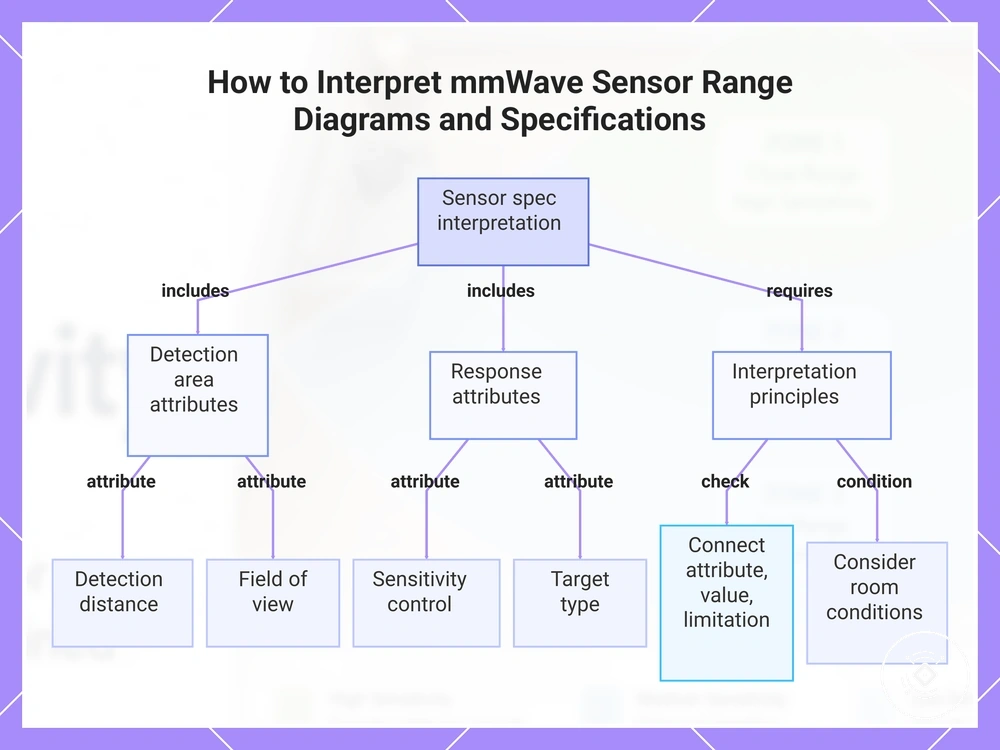
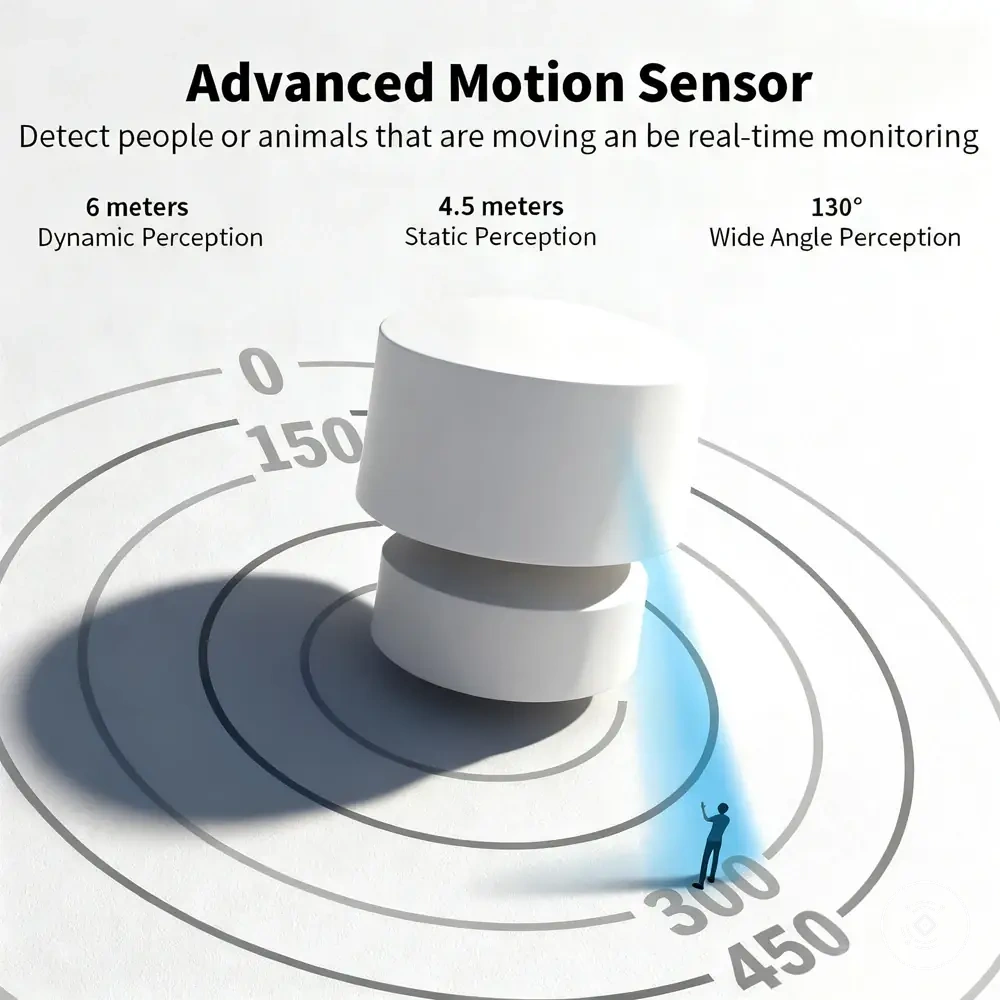
Range diagrams and sensor specifications are interpretation aids that help evaluate mmWave presence sensor attributes rather than guarantees of identical room outcomes. A specification describes an attribute such as detection distance, field of view, or sensitivity control, while the practical result can depend on room condition, target type, and sensor configuration. Reading these details helps compare attribute claims without treating a single value as a fixed outcome.
A range diagram can show how a coverage area is represented in relation to distance and direction. Detection distance and field of view help describe the intended detection area, but detection reliability may vary depending on room condition, target type, and sensor design. A maximum range claim should be interpreted alongside other attributes rather than viewed as a complete prediction of real-world performance. Zone support can also influence how the detection area is divided and understood.
Specification fields should be evaluated by connecting the attribute, value, and limitation together. The meaning of a sensitivity control value depends on how the sensor interprets smaller signals and surrounding conditions. A target type can influence the expected outcome, while the same specification claim may be interpreted differently across different environments.
These specification-reading criteria help organize what range diagrams and spec sheets can clarify:
- Detection distance: Describes the distance-related attribute of the detection area, while the practical interpretation may depend on target type and room condition.
- Field of view: Describes the coverage direction and shape that helps interpret where detection may occur.
- Zone support: Indicates how the coverage area may be divided or interpreted through different zones.
- Sensitivity control: Describes how response settings may influence the interpretation of smaller signals.
- Target type: Helps explain why different targets may produce different detection outcomes under the same specification claim.
Category-level comparison should focus on how specification claims relate to intended conditions rather than selecting a value in isolation. A range diagram or specification sheet provides decision signals, but the final interpretation depends on the interaction between attributes, environment, and detection needs.
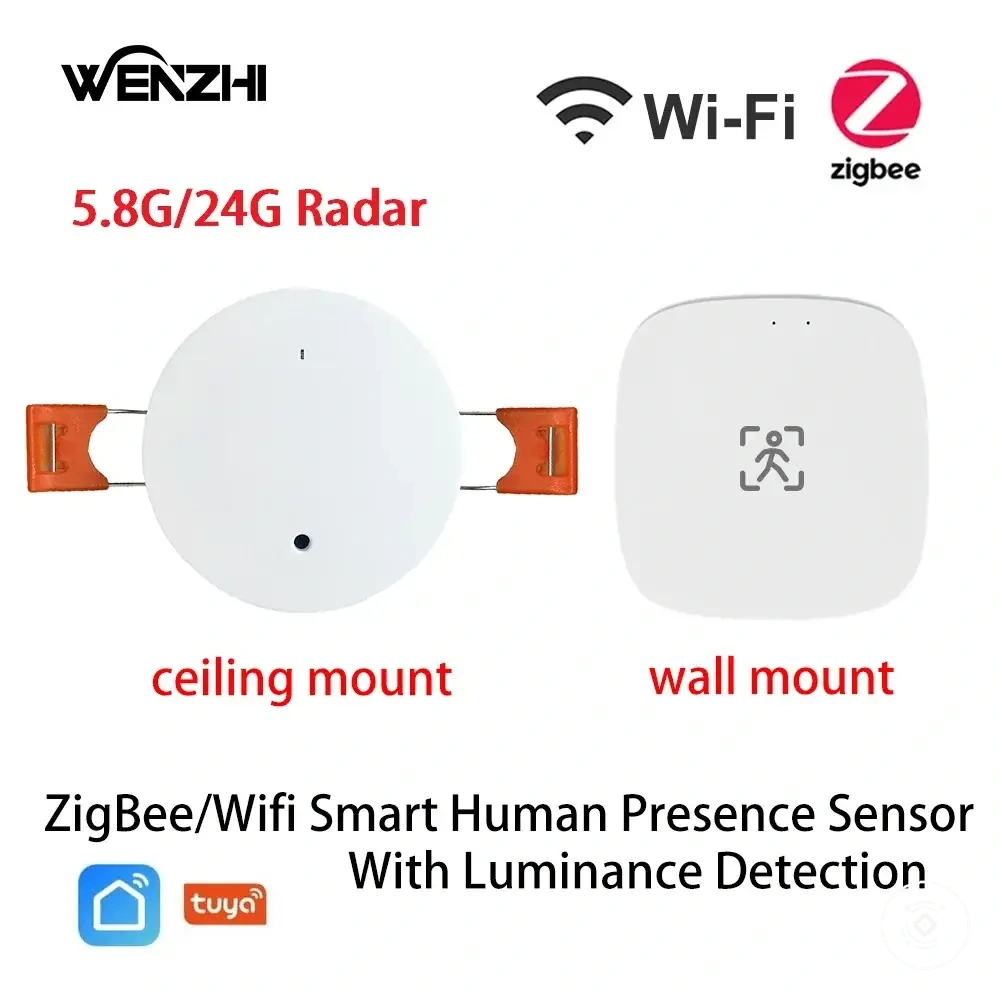
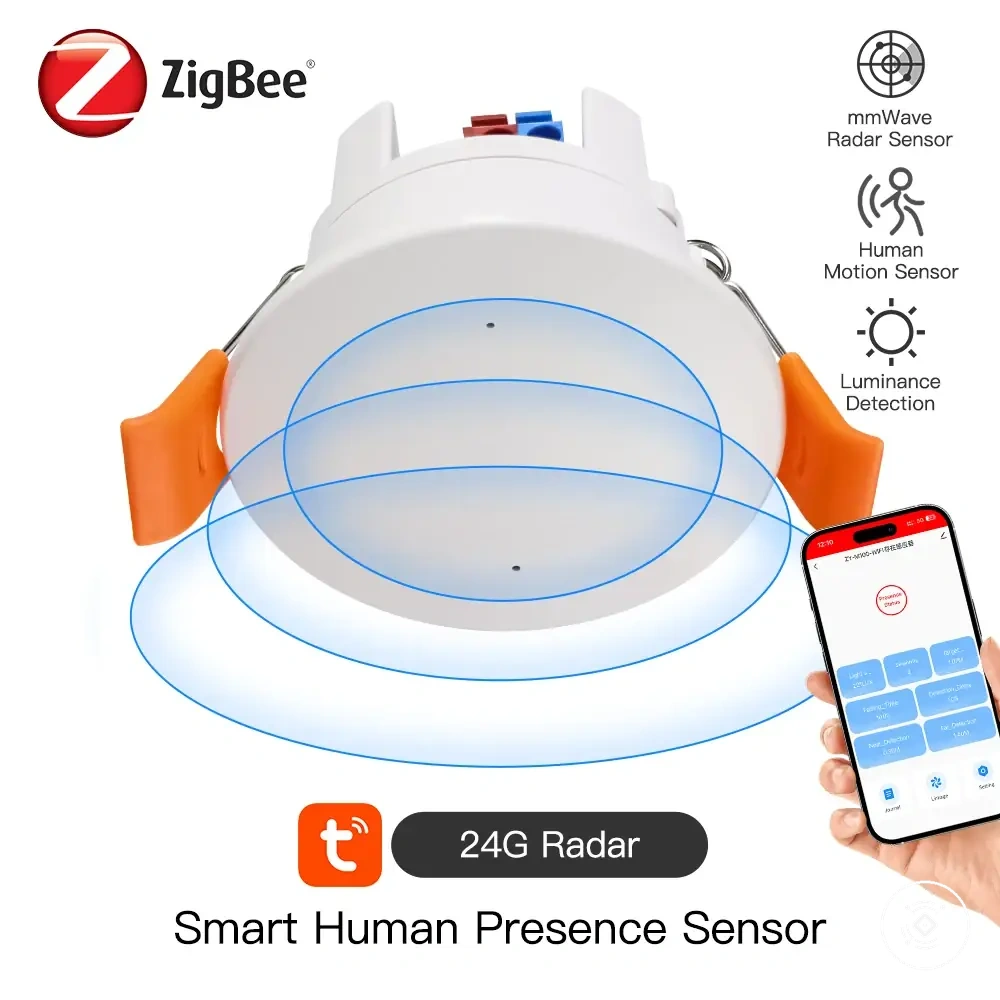
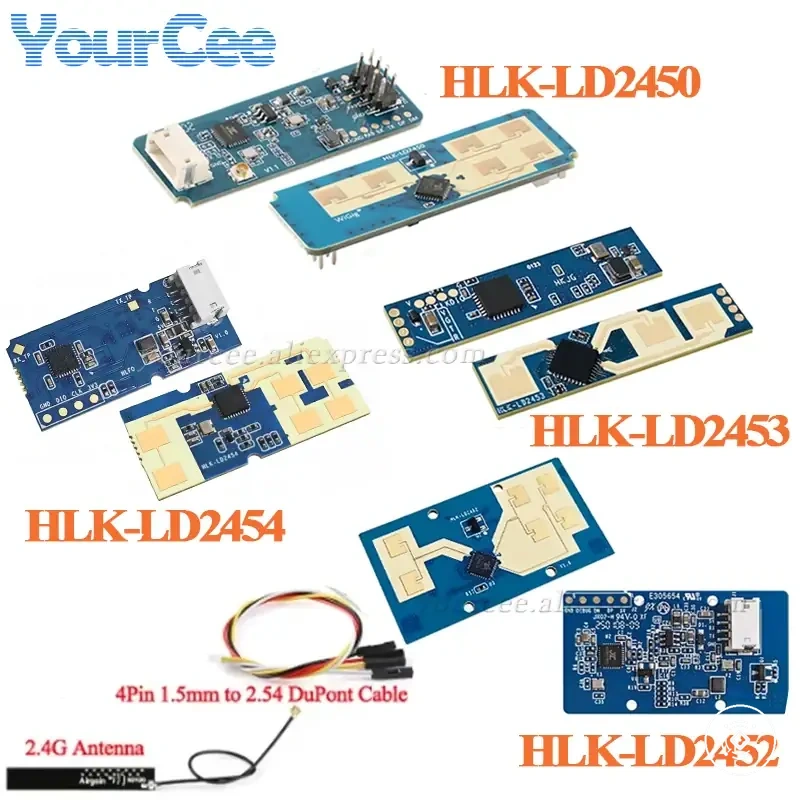
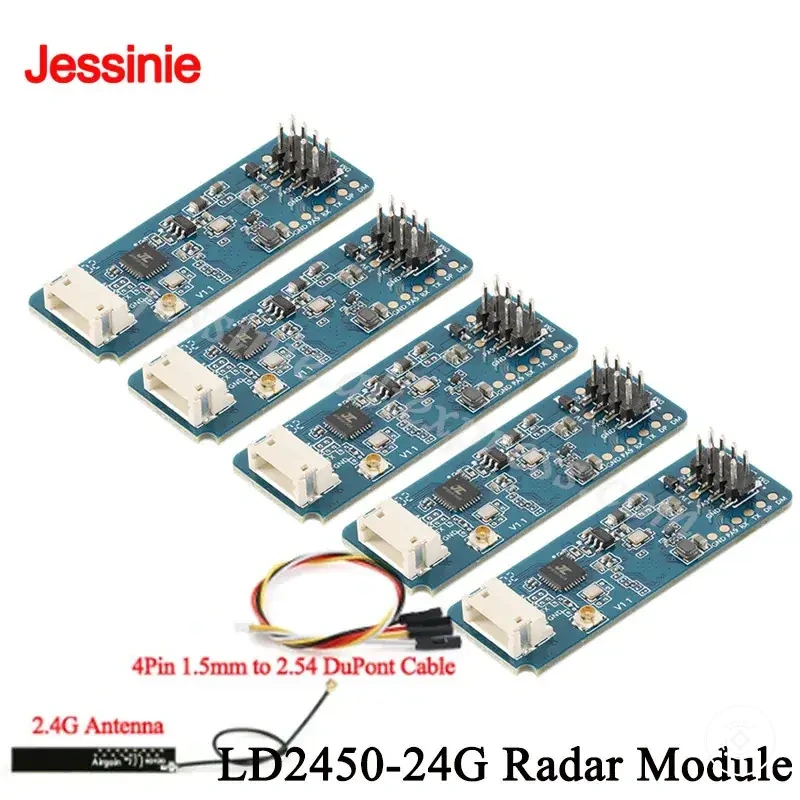
The products below are useful examples for comparing available options. Before buying, check that the compatibility criteria, key features, and product details match your needs.
This chart shows the main specification attributes and interpretation principles for evaluating mmWave presence sensor range diagrams and spec sheets.