mmWave presence sensor compatibility for smart-home systems
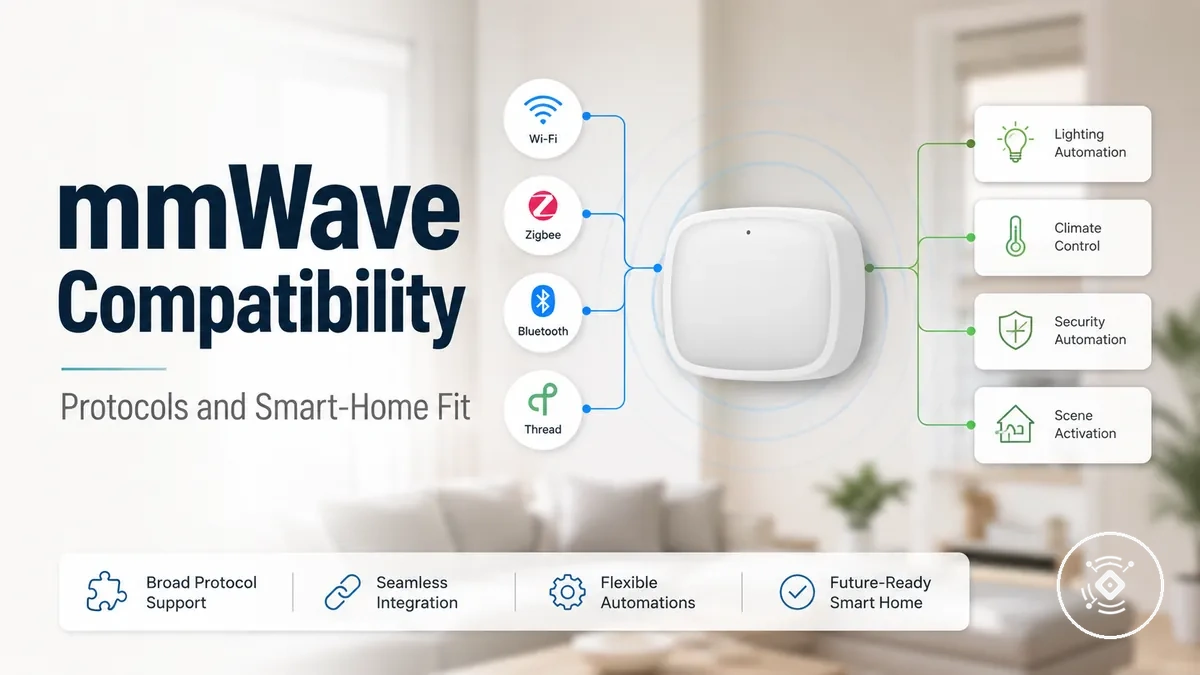
mmWave presence sensor compatibility depends on the connection method, the smart-home platform, and the sensor data available for automation. A compatible connection may not provide every available function, so checking the protocol, hub, app, firmware, and exposed sensor features helps determine whether a sensor fits a specific smart-home setup.
mmWave presence sensor compatibility describes how a sensor communicates with a smart-home system and how that system can use the information provided by the sensor. The sensor remains the main entity, while protocols, platforms, and hubs act as conditions that influence how the sensor can be integrated and used.
A connected mmWave presence sensor and a fully usable smart-home integration are related but different considerations. The level of available control can vary depending on the sensor model, integration method, platform behaviour, and the data exposed to automation systems.
What compatibility means for a mmWave presence sensor
A mmWave presence sensor is compatible with a smart-home system when the sensor’s connection method and available data can be used by the intended platform or automation setup. Compatibility defines how the sensor, communication method, and smart-home environment work together rather than only whether a device can connect.
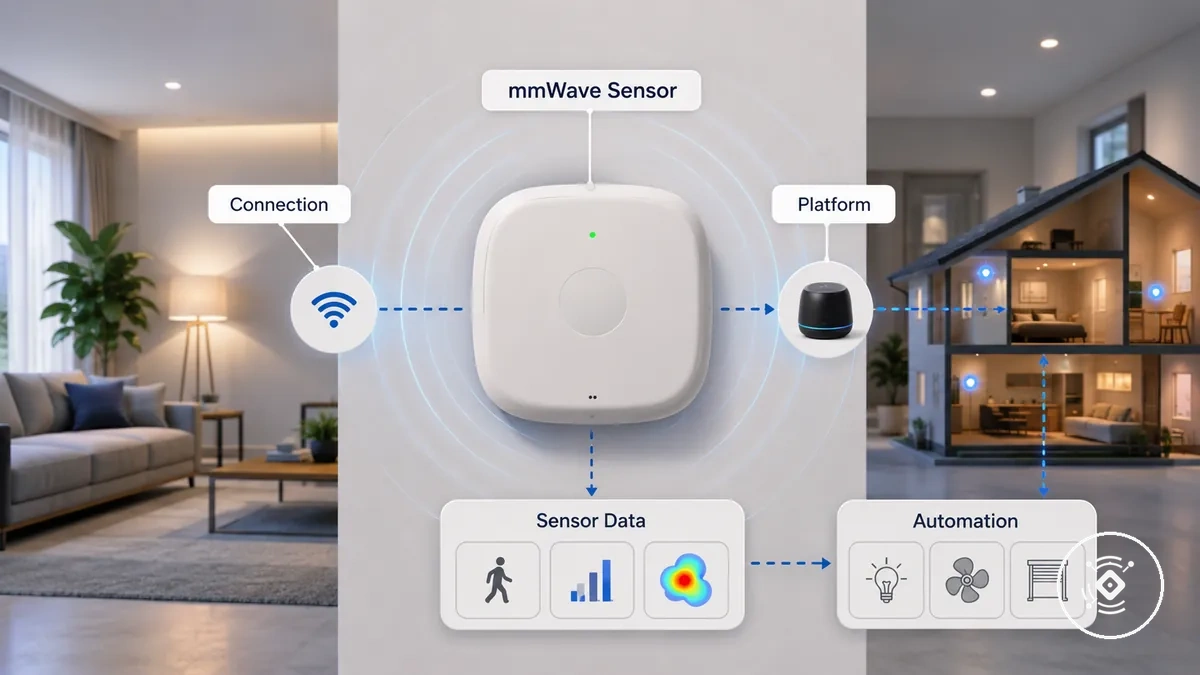
mmWave presence sensor guide provides the broader category context, while compatibility focuses on how a specific sensor fits within a smart-home environment. A connected sensor may expose different information or controls depending on the protocol, hub, app, platform recognition, and integration method.
Compatibility is not limited to pairing a mmWave presence sensor with a system. It also includes whether the smart-home platform can access the sensor information needed for a particular automation purpose. Feature availability can vary by sensor model, firmware, integration path, and the values exposed to the platform.
Protocol support versus platform support
Protocol support and platform support describe different parts of mmWave presence sensor compatibility. Protocol support refers to how a sensor connects with a smart-home system, while platform support refers to how that system recognises and uses the available sensor information.
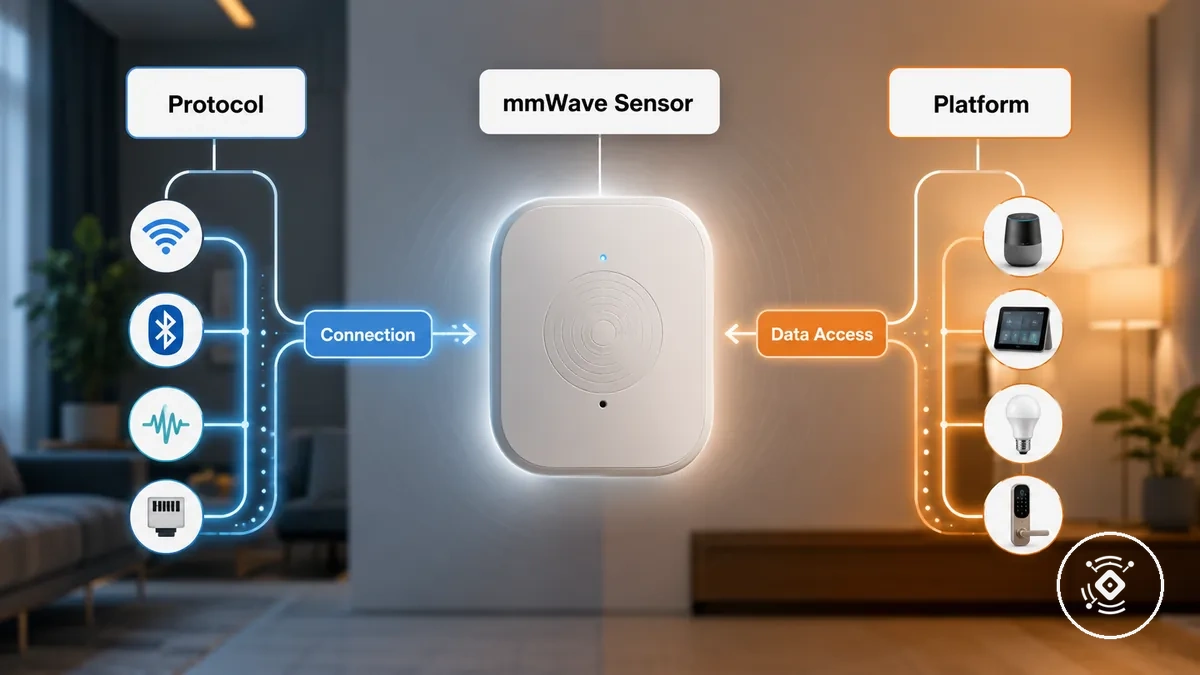
A communication protocol can provide a connection path for a mmWave presence sensor, but the usable functions can depend on how the smart-home platform interprets the connected sensor data. A connected sensor may expose different values or controls depending on the integration method and platform environment.
Platform support depends on conditions such as the hub, app, firmware, and available sensor entities. Checking both protocol support and platform support helps clarify whether a mmWave presence sensor can provide the information needed for a specific automation purpose.
Local control, cloud control, and app dependency
Local control, cloud control, and app dependency describe how a mmWave presence sensor communicates with a smart-home system and how the control path can influence compatibility. The selected control path determines whether sensor information is handled within a local environment, through a cloud service, or through an application layer.
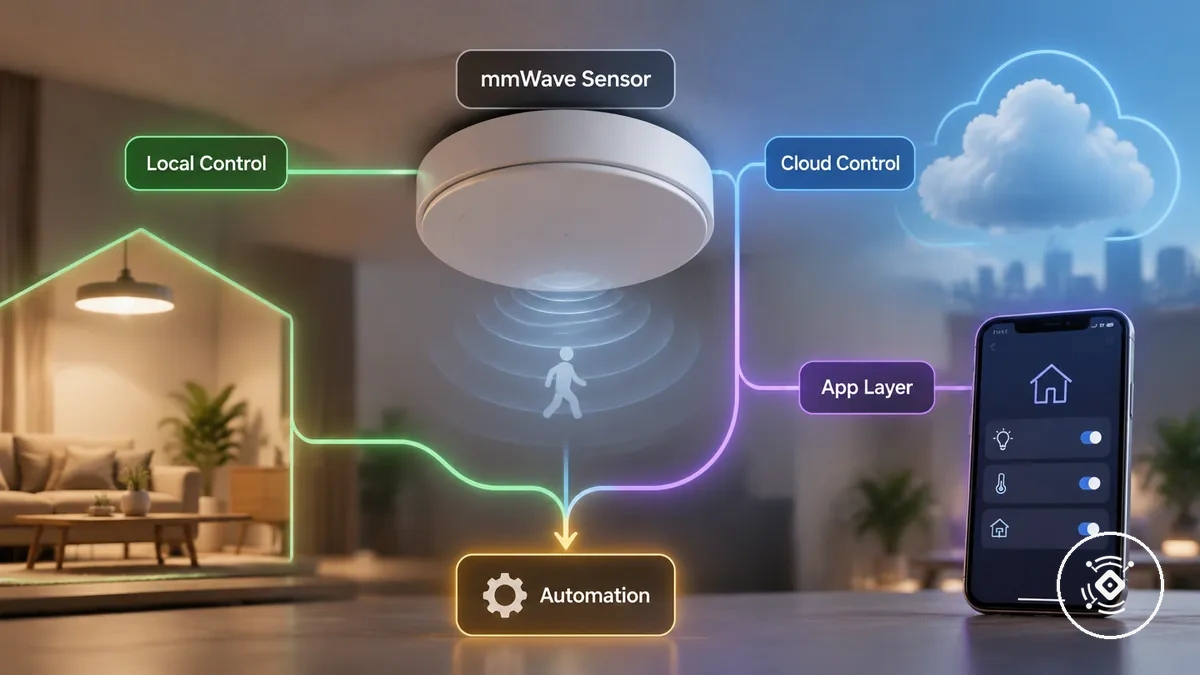
Local control keeps automation logic within the available local smart-home environment, while cloud control may require an external service connection. App dependency refers to situations where configuration, access, or available functions rely on an application. The practical effect depends on the sensor, platform, and integration method.
When evaluating mmWave presence sensor compatibility, the control path is a factor alongside protocol and platform support. A suitable setup depends on the required automation behaviour, the available access method, and the functions exposed by the connected system.
Protocol choices for compatible presence sensing
Protocol choices for a mmWave presence sensor depend on the smart-home environment, required connection method, and the type of automation support needed. Different protocol paths can influence hub requirements, setup conditions, available sensor information, and how the system uses presence data.
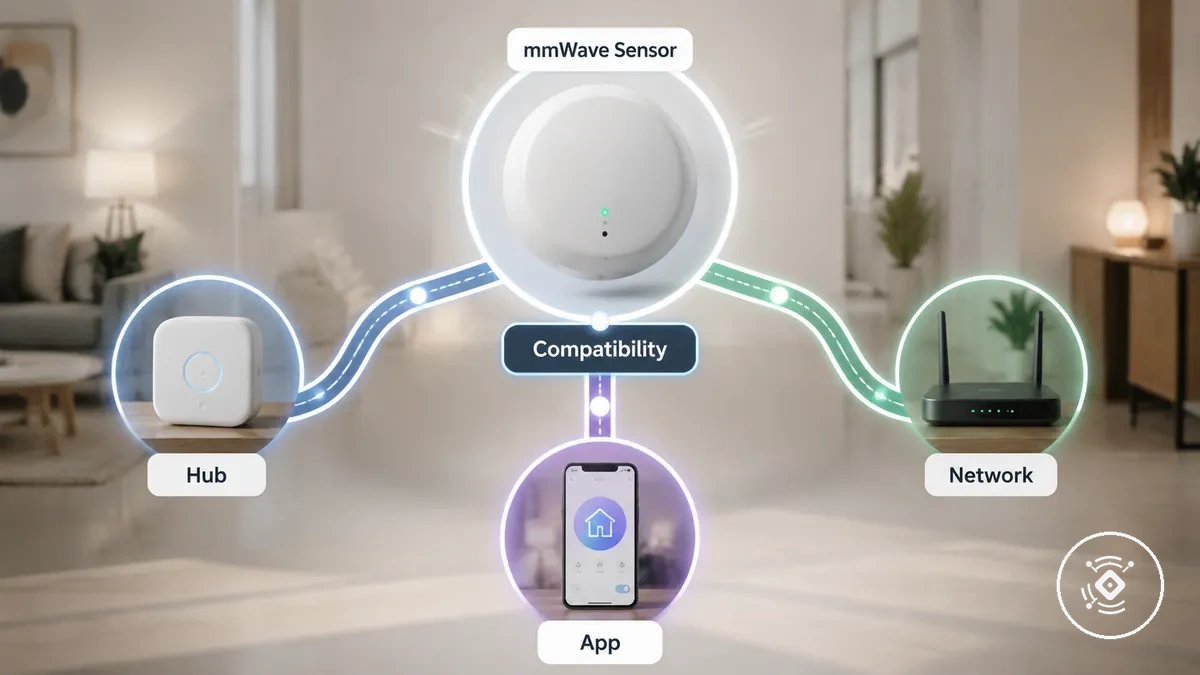
Protocol selection is a compatibility decision rather than a ranking of options. A suitable protocol depends on the existing smart-home setup, the required control path, and whether the connected platform can access the sensor information needed for the intended use.
| Protocol path | Requirement | Limitation | Decision effect |
|---|---|---|---|
| Hub-based connection | Requires a compatible hub or integration method | Available functions may depend on platform recognition | May suit systems built around a supported hub environment |
| Network connection | Depends on the sensor and platform connection method | Feature access can vary by integration | May suit setups where network-based access fits the automation goal |
| App-based connection | Relies on the available application and ecosystem | Controls and exposed values may vary | May suit users managing sensor functions through an app layer |
Zigbee sensors and hub-based compatibility
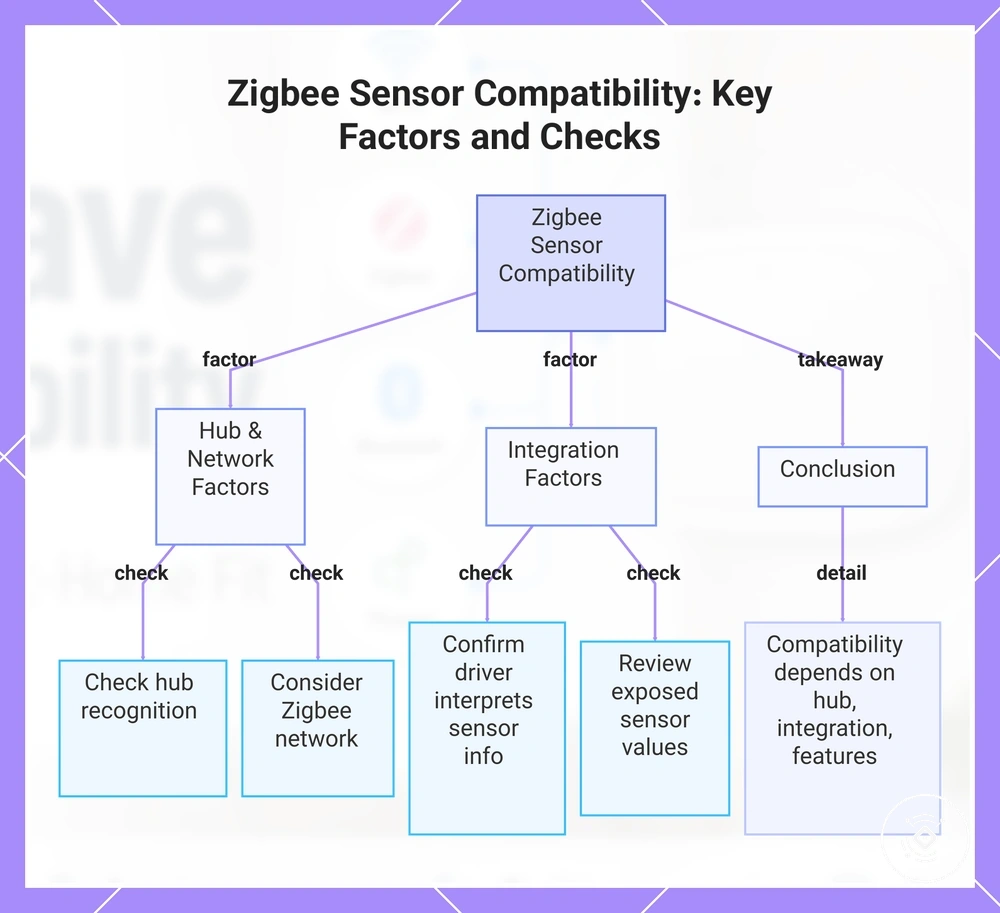
Zigbee sensor compatibility depends on whether the sensor, hub, coordinator, and integration method can work together to provide the required presence data. Zigbee support alone does not define the final compatibility outcome because available functions can vary based on hub support, driver support, and exposed sensor entities.
Verification for a Zigbee mmWave presence sensor should focus on the conditions that influence integration:
- Hub support: Check whether the selected hub or coordinator recognises the sensor through the available integration method.
- Driver support: Confirm that the integration can interpret the sensor information needed for the intended automation.
- Exposed entities: Review which sensor values and controls are available after connection.
- Mesh conditions: Consider the Zigbee network environment because communication behaviour can depend on the surrounding setup.
Zigbee can be a suitable compatibility path for some smart-home environments, but the result depends on the specific hub, integration path, and available sensor features rather than Zigbee support alone.
This chart shows the key factors that determine Zigbee sensor compatibility and the checks needed to verify integration.
WiFi sensors and gateway-free setup limits
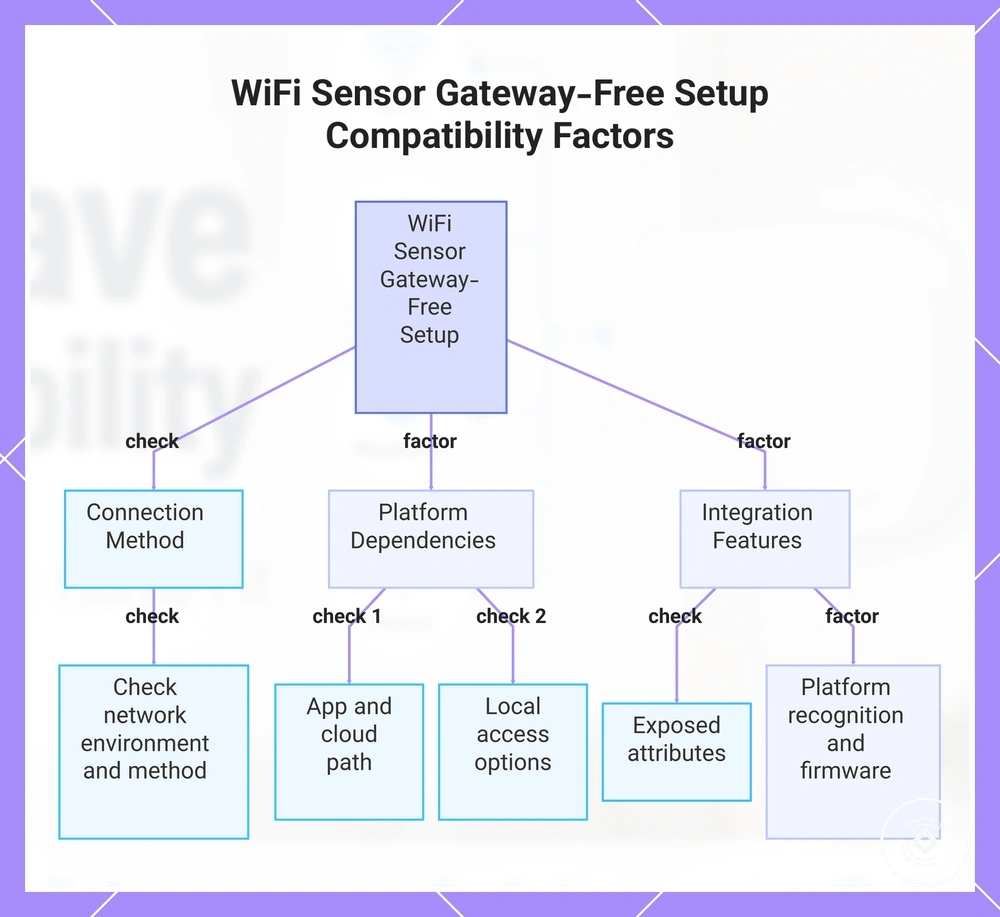
WiFi sensor compatibility depends on the sensor’s connection method, the smart-home platform, and the functions available after integration. A WiFi mmWave presence sensor may reduce the need for a separate gateway in some setups, but a gateway-free connection does not automatically provide full platform compatibility.
- Router connection: Check whether the sensor can connect through the available network environment and required connection method.
- App and cloud path: Verify whether configuration, access, or sensor functions depend on an application or cloud service.
- Local access: Consider whether the platform provides the local control options needed for the intended automation.
- Exposed attributes: Review which sensor values and controls are available through the selected integration.
WiFi can simplify the connection path in some cases, but compatibility still depends on factors such as platform recognition, firmware, app behaviour, and available integration features. For a comparison of another connection approach, see wired versus wireless sensor choice.
This chart shows the key factors and checks that determine WiFi sensor compatibility when using a gateway-free setup.
Matter, Thread, and Bluetooth support boundaries
Matter, Thread, and Bluetooth support boundaries depend on how a smart-home ecosystem recognises the connection method and which mmWave presence sensor functions are available after integration. Ecosystem-level support may provide a connection path, but advanced sensor features can depend on the device, bridge requirements, firmware, and platform implementation.
- Basic ecosystem support: A sensor may be recognised within an ecosystem while only exposing the functions available through the integration path.
- Feature availability: Presence data, automation values, and other exposed attributes can vary depending on the sensor and platform environment.
- Bridge requirements: Thread or Bluetooth setups may depend on compatible ecosystem components before sensor information is available for automation.
Matter, Thread, and Bluetooth should be considered compatibility factors rather than universal replacements for other connection approaches. The practical level of support depends on the specific sensor, ecosystem, and automation requirements.
Hub and ecosystem requirements
Hub and ecosystem requirements for a mmWave presence sensor depend on the connection method, controller, integration path, and sensor information needed for automation. A compatible setup requires checking how the smart-home environment recognises the sensor and which functions are available after integration.
| Requirement | Control point | Compatibility check | Decision effect |
|---|---|---|---|
| Hub or bridge | Connection between the sensor and smart-home ecosystem | Check whether the hub or bridge supports the required integration path | May influence which sensor functions are available |
| Controller platform | System managing sensor data and automation rules | Review how the platform recognises and uses the connected sensor | May affect available automation options |
| Driver or integration | Software layer connecting the sensor with the platform | Verify whether required sensor entities are exposed | May determine the level of feature access |
| App and exposed entities | User-facing controls and available sensor values | Check which settings and data points are accessible | May affect how the sensor fits the intended automation |
Ecosystem compatibility depends on the combination of hub, bridge, controller, integration method, firmware, and app requirements. The suitable setup varies by the sensor, protocol path, and functions needed from the automation system.
Home Assistant and exposed sensor entities
Home Assistant compatibility depends on the integration path, available sensor entities, and how the mmWave presence sensor data can be used for automation. A sensor connection does not define the complete compatibility outcome because exposed entities and integration quality can vary.
- Integration path: Check how the mmWave presence sensor connects with Home Assistant and whether the selected integration method is available.
- Exposed entities: Review which sensor values, attributes, and controls become available after integration.
- Update behaviour: Consider whether the available sensor data updates in a way that matches the intended automation needs.
- Diagnostics: Verify whether the integration provides relevant information for checking the sensor setup.
Home Assistant usefulness depends on the combination of the sensor, integration method, firmware, drivers, and exposed entities. Reviewing entity exposure and automation readiness helps determine whether a mmWave presence sensor fits a specific Home Assistant setup.
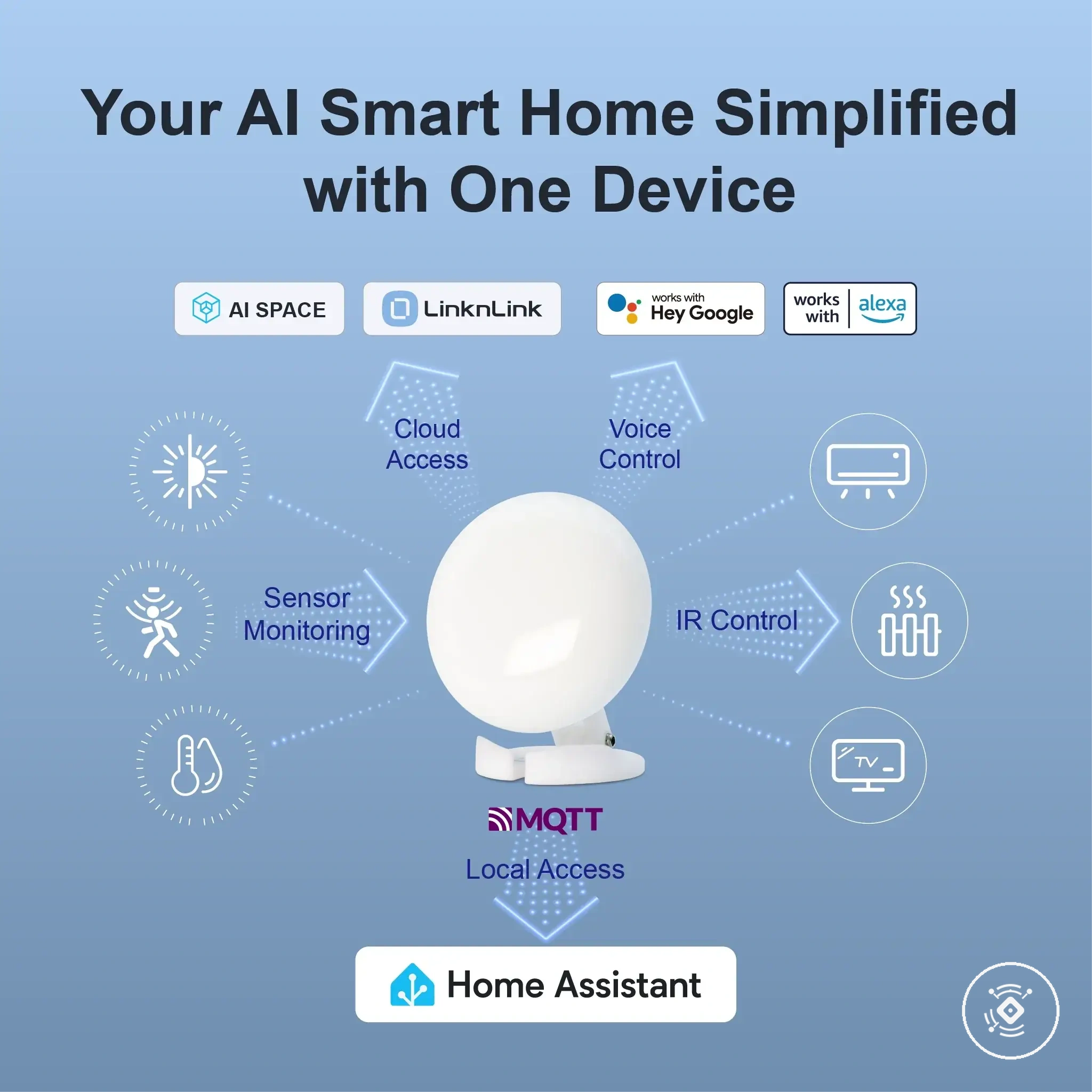
HomeKit, Alexa, Google Home, SmartThings, Homey, and Hubitat fit
HomeKit, Alexa, Google Home, SmartThings, Homey, and Hubitat fit depends on how each ecosystem recognises the mmWave presence sensor, the available connection path, and which automation functions are exposed after integration. Ecosystem recognition alone does not determine whether all sensor features are available.
| Ecosystem group | Recognition path | Compatibility check | Common limitation |
|---|---|---|---|
| HomeKit | Depends on the supported integration path and exposed device functions | Check available sensor controls, triggers, and settings | Automation options may vary by device and integration |
| Alexa and Google Home | Depends on recognised device classes and connected ecosystem support | Review which controls and triggers are exposed | Advanced sensor attributes may not be available through every integration |
| SmartThings, Homey, and Hubitat | Depends on bridges, drivers, firmware, and platform integration | Verify recognised entities and automation capabilities | Available functions can vary by setup conditions |
Mainstream smart-home ecosystems can provide different levels of mmWave presence sensor compatibility. Checking the recognition path, exposed entities, and required automation functions helps determine whether a specific ecosystem fits the intended setup.
Vendor hubs and proprietary feature access
Vendor hubs and proprietary feature access matter when a mmWave presence sensor relies on a specific ecosystem, pairing method, or integration path for additional functions. A vendor hub is not always required, but it may provide access to settings, zones, advanced controls, or local automation options that are not exposed through every platform connection.
- Pairing method: Check whether the sensor requires a specific hub or ecosystem connection for the intended features.
- Firmware and settings: Review whether advanced configuration options depend on the vendor environment or available software support.
- Platform handoff: Consider which sensor information can be shared with other platforms after integration.
- Dependency level: Evaluate whether proprietary access provides useful functions or introduces an unnecessary dependency for the intended setup.
Vendor hubs can provide additional control points in some smart-home configurations, while other setups may use alternative integration paths. The compatibility effect depends on the sensor, ecosystem, firmware, and the features required for automation.
Sensor features that affect compatibility
Sensor features affect mmWave presence sensor compatibility when the connected platform needs specific values, controls, or behaviours for automation. The compatibility impact depends on which features are exposed through the integration path and how those features are used by the smart-home system.
| Feature | Platform exposure | Condition | Automation effect |
|---|---|---|---|
| Detection zones | May appear as configurable areas or exposed entities depending on device and platform support | Availability can vary by integration method | Can influence how presence information is used in automations |
| Sensitivity settings | May be available through device controls or configuration options | Exposure depends on the sensor and connected platform | Can affect how the sensor behaviour matches automation needs |
| Timeout settings | May be exposed as adjustable values or handled internally by the device | Depends on firmware and integration support | Can influence how presence states are processed |
| Update behaviour | Depends on available sensor data and platform handling | Varies by device and integration path | May affect how automation rules respond to sensor changes |
Sensor-side features do not provide the same compatibility value in every setup. The relationship between the feature, exposed entities, platform support, and automation requirement determines how useful the sensor becomes within a smart-home system.
Presence, motion, illuminance, zones, and distance exposure
Presence, motion, illuminance, zones, and distance values affect mmWave presence sensor compatibility when a smart-home platform needs to use exposed sensor attributes for automation. The practical value depends on which entity values are available through the integration and how those values are used by the connected system.
| Entity value | Exposed attribute | Condition | Likely automation use |
|---|---|---|---|
| Presence | Presence state or detection status | Availability depends on the sensor integration and platform support | May support automations based on occupancy state changes |
| Motion | Movement-related state or value | Exposure varies by device and integration method | May support activity-based automation conditions |
| Illuminance | Light level information | Depends on whether the value is exposed to the platform | Can support automations that consider lighting conditions |
| Zones and distance | Area or distance-related values | Availability depends on device configuration and platform handling | May support more specific automation conditions |
Exposed entity values do not provide identical automation options across every setup. Compatibility depends on the relationship between the sensor value, platform exposure, device configuration, and the automation requirement.
Response speed, update behaviour, and automation reliability
Response speed, update behaviour, and automation reliability depend on how a mmWave presence sensor reports changes, how the platform processes those events, and how automation rules use the available sensor information. Reporting behaviour can influence automation outcomes, but the result depends on the complete sensor-to-platform path.
- Sensor reporting: Check how the sensor communicates state changes and which updates are exposed to the platform.
- Platform event handling: Consider how the smart-home system processes incoming sensor information before triggering automations.
- Timeout and state changes: Review how presence states are maintained or changed through available integration settings.
- Automation response: Verify that the reporting behaviour matches the intended automation requirement.
Update behaviour can affect how consistent an automation feels during use, but reliability depends on factors such as the sensor, integration method, firmware, platform processing, and automation configuration. Reviewing the complete event path helps determine whether the setup matches the required automation behaviour.
Automation fit for real smart-home use
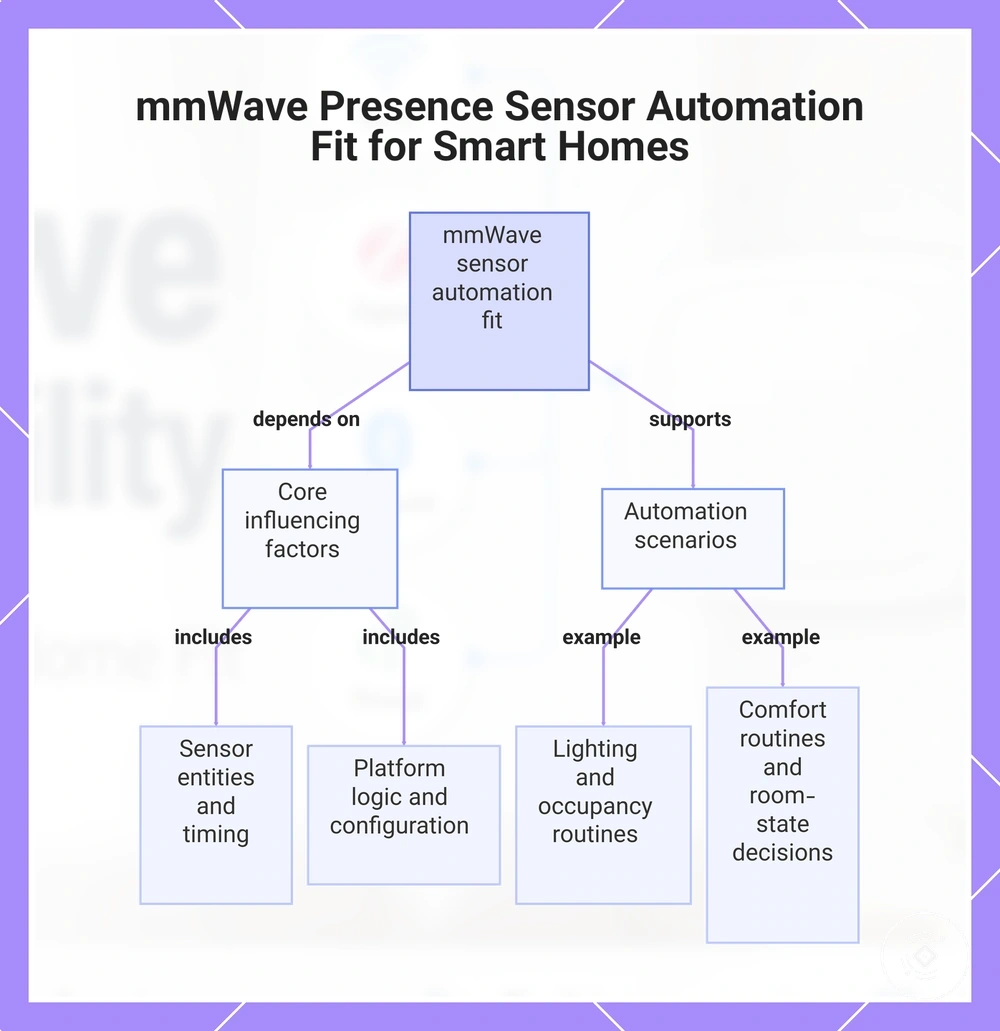
Automation fit for real smart-home use depends on how a mmWave presence sensor’s exposed entities, timing values, and platform logic match the intended room behaviour. A compatible sensor setup can support different automation goals, but the outcome depends on configuration, placement, timeout settings, and how the platform processes sensor events.
- Lighting automation: Presence entities and timing values can influence how a system responds to occupancy changes in a room.
- Occupancy routines: Sensor states may support automations that depend on whether a space is considered occupied.
- Comfort routines: Exposed presence information can be combined with other smart-home conditions when creating room behaviours.
- Room-state decisions: Timing values and platform event handling can affect how changing conditions are interpreted.
For broader examples of how compatibility choices can translate into practical automation scenarios, see smart lighting and automation use. The suitable setup depends on the available sensor entities, platform logic, and the required room behaviour.
This chart shows the key factors and automation scenarios that determine how well a mmWave presence sensor fits real smart-home use.
Fast-on motion and stay-on presence behaviour
Fast-on motion and stay-on presence behaviour affect automation compatibility by changing how a smart-home system responds to sensor events. Fast-on behaviour can suit automations that need a quick trigger response, while stay-on presence behaviour can suit automations that depend on a maintained room state.
- Fast-on behaviour: A trigger-focused response may suit actions where a quick state change is useful, depending on sensor settings and platform event handling.
- Stay-on presence behaviour: A maintained presence state may suit occupancy-based actions where the room condition needs to remain active for longer.
- Trigger type: The required automation outcome can influence whether a fast state change or a held presence value is more suitable.
- Timeout condition: Hold behaviour can depend on sensor settings, platform processing, and room context.
The choice between fast-on motion and stay-on presence behaviour depends on the automation requirement, available sensor values, and how the platform interprets events. These behaviours should be evaluated as compatibility factors rather than fixed timing outcomes.
Lighting, occupancy, and room-state automations
Lighting, occupancy, and room-state automations depend on how a mmWave presence sensor exposes values, how the platform uses those entities, and which room condition the automation is designed to address. Compatible sensor data can support different automation types, but the result depends on exposed entities, timing values, placement, and platform rules.
- Lighting automation: Presence values can support lighting decisions when room activity, timing conditions, and platform logic align with the intended behaviour. A limitation is that outcomes can vary based on sensor placement and available entities.
- Occupancy automation: Occupancy-related values can support room-state decisions when the platform can interpret the available presence information. The result depends on how the system handles state changes and timeouts.
- Comfort automation: Exposed sensor data can contribute to comfort-related room behaviours when combined with other available smart-home conditions. The available options depend on the integration and platform capabilities.
- Room-state automation: Sensor values can help a platform respond to changing room conditions, but the behaviour depends on configuration, event handling, and automation logic.
Mapping exposed sensor values to room conditions helps clarify whether a mmWave presence sensor fits a specific automation goal. The suitable outcome depends on the relationship between the sensor data, platform rules, and the intended use case.
Compatibility limits that can cause poor fit
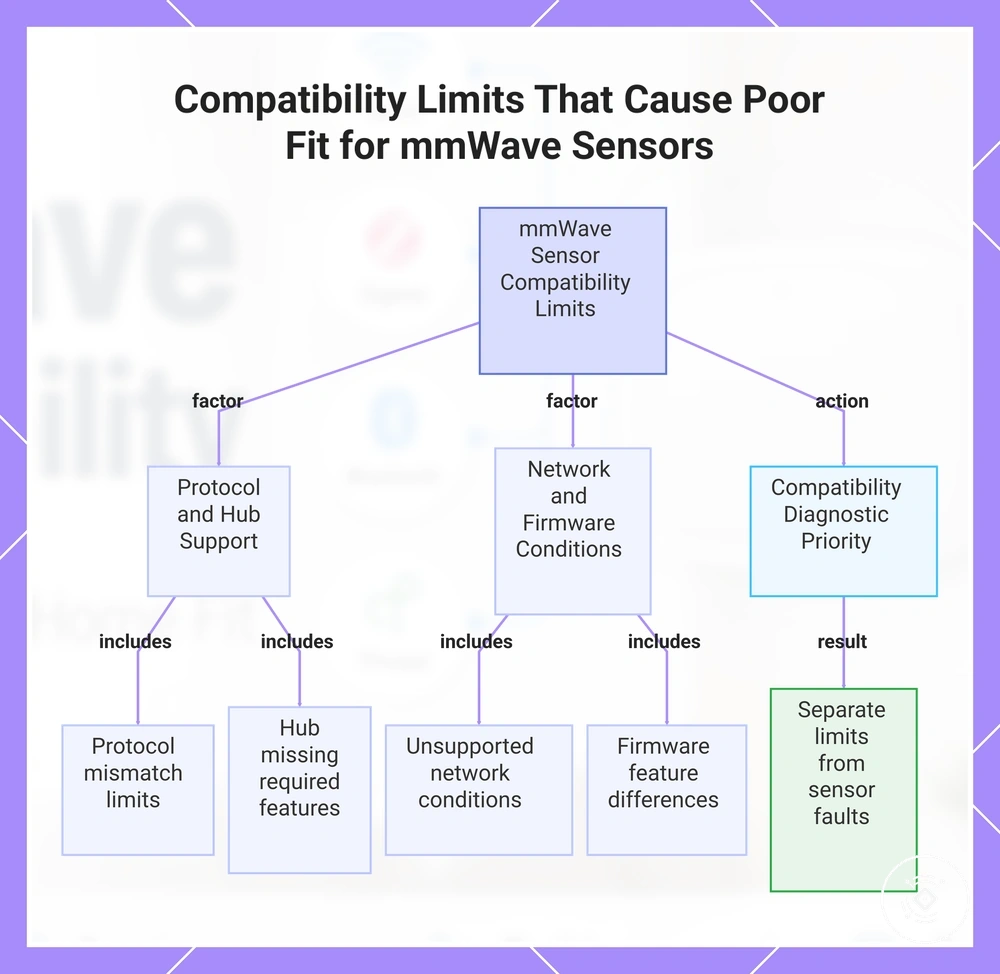
Compatibility limits can cause poor fit when a mmWave presence sensor does not match the required protocol, hub, network, firmware, or exposed features of a smart-home system. A sensor that appears unsuitable may be affected by integration conditions rather than a device defect, so compatibility checks should come before assuming hardware failure.
- Protocol compatibility: A communication method that does not align with the available integration path may limit recognition or available functions.
- Hub and platform support: Limited device recognition or missing entities may occur when the connected system does not expose the required features.
- Network conditions: Connection behaviour may vary when the network environment does not support the expected communication conditions.
- Firmware and feature exposure: Settings, controls, or automation options may differ depending on device software and platform handling.
When a mmWave presence sensor does not behave as expected, separating compatibility limits from possible sensor faults can clarify the next check. The likely condition depends on the sensor, integration method, configuration, firmware, and available feature exposure.
This chart shows the main compatibility factors that can cause poor fit in mmWave presence sensors and a diagnostic step to separate limits from hardware faults.
When the protocol works but advanced features do not
A working protocol connection does not always provide access to all mmWave presence sensor features. A sensor may pair successfully while advanced values such as zones, distance, sensitivity, illuminance, or additional settings depend on the platform, driver, firmware, or bridge support.
- Working protocol: A recognised connection may provide basic occupancy information while other sensor values remain unavailable.
- Missing feature exposure: Unavailable zones, distance values, sensitivity controls, lux data, or settings may indicate partial feature support rather than a failed sensor.
- Platform and driver support: Feature visibility can vary depending on how the integration handles available sensor data.
- Firmware and bridge conditions: Additional controls may depend on device software and the connected ecosystem components.
When a mmWave presence sensor connects but lacks expected advanced features, checking feature exposure can help identify whether the limitation comes from the integration path. Partial support may still provide useful basic presence information depending on the available entities and automation needs.
When network, hub, or setup conditions restrict performance
Network, hub, or setup conditions can restrict mmWave presence sensor performance when the communication path, connected ecosystem, or configuration affects how sensor information reaches the platform. A performance issue may come from compatibility conditions rather than proving that the sensor is incompatible or defective.
- Network condition: Delays, missing updates, or inconsistent communication may relate to the available network environment and connection conditions.
- Hub and bridge condition: Sensor behaviour may vary depending on hub support, bridge communication, and available integration features.
- Firmware and account condition: Feature access or communication behaviour can depend on device software, platform state, and ecosystem support.
- Power and setup condition: Unexpected behaviour may be linked to setup factors that affect the sensor communication path.
When network, hub, or setup conditions restrict performance, checking the communication path and integration conditions can help identify the likely limitation. For broader setup considerations, see installation and setup requirements.
How to choose a compatible mmWave presence sensor
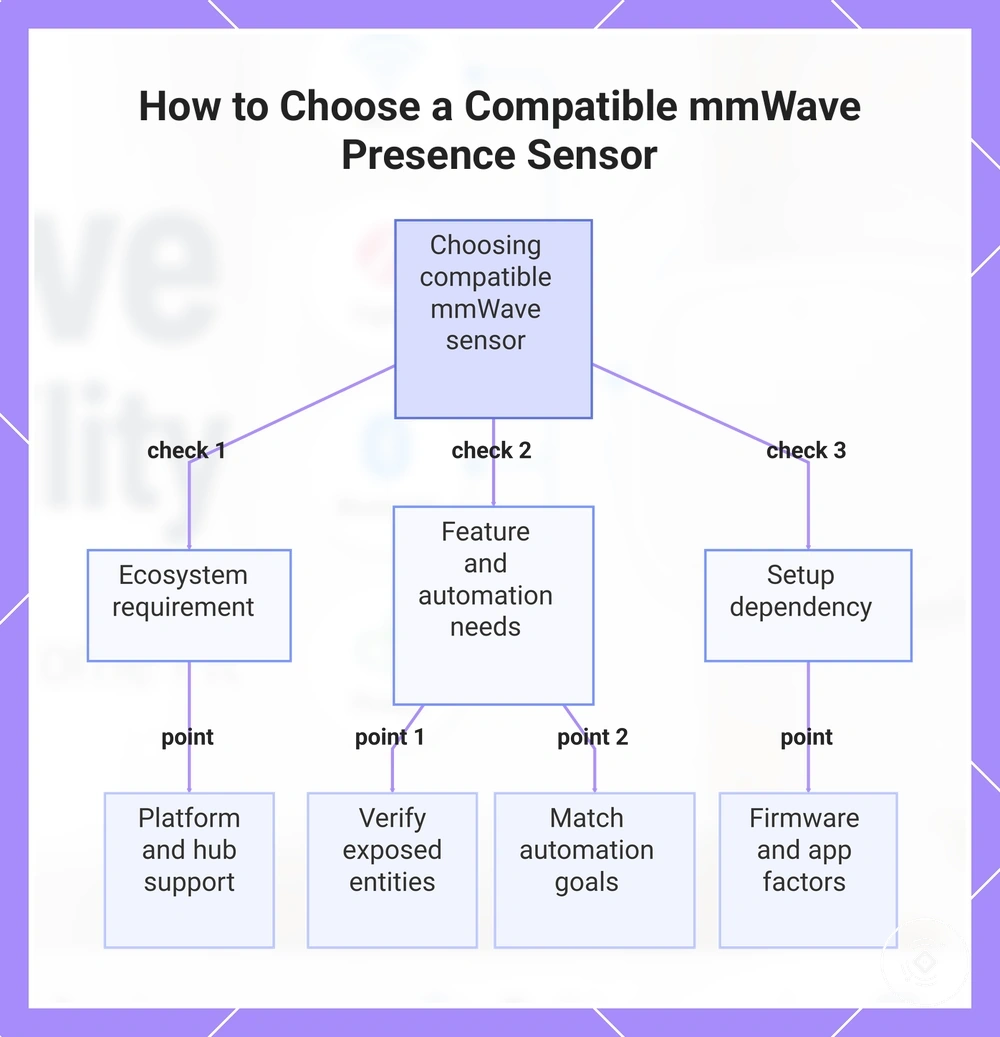
Choosing a compatible mmWave presence sensor depends on matching the sensor’s protocol, hub support, exposed entities, automation requirements, and setup conditions with the intended smart-home use case. A suitable choice requires verifying compatibility factors before considering specific product options.
- Ecosystem requirement: Check whether the sensor supports the required platform, hub, bridge, or integration path.
- Feature requirement: Verify that the needed entities, such as presence states, zones, sensitivity settings, or other exposed values, are available through the selected setup.
- Automation requirement: Match available sensor data with the intended room behaviour, timing needs, and automation goals.
- Setup dependency: Consider firmware, app support, network conditions, and configuration factors that may influence compatibility.
For a broader decision process, see how to choose a compatible sensor after consolidating these compatibility criteria. A final compatibility check helps determine whether the available sensor features align with the intended smart-home environment.
This chart shows the main compatibility checks for selecting a suitable mmWave presence sensor.
Here are product examples that may make comparison easier. Before buying, always review the compatibility criteria, essential features, and product details.